Travel Tips
Korea Winter Travel Preparation Guide: What to Pack, Hot Packs, Ice Cleats and Warm Indoor Stops (2026–27)
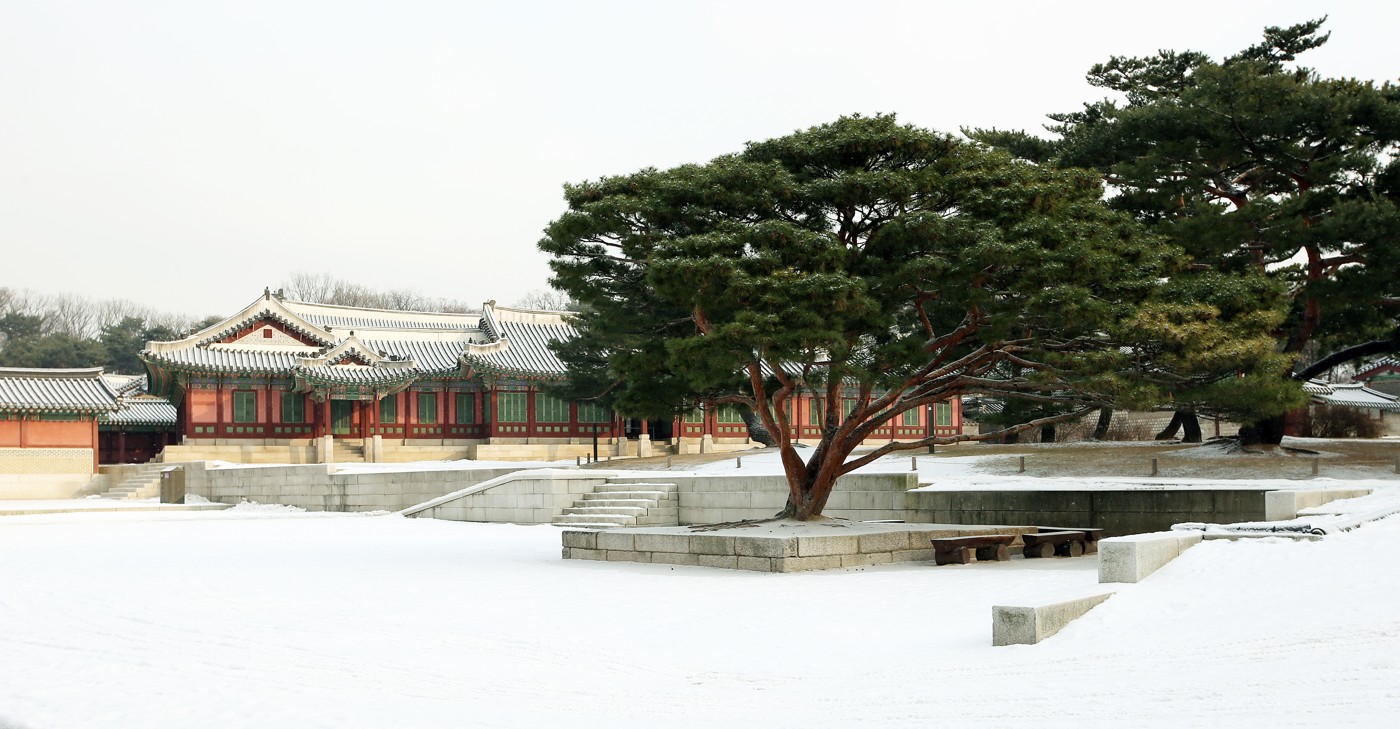
Cover photo: Changdeokgung Palace in snow. Photo: Korea.net / Korean Culture and Information Service (Jeon Han), via Wikimedia Commons, CC BY-SA 2.0 (resized).

Pack for the cold, plan a warm escape, and keep your footing
A Korea winter trip is much easier when your bag contains more than a heavy coat. Gloves you can actually use, shoes with grip, and somewhere indoors to spend a cold afternoon can matter just as much. This guide brings together Seoul’s winter climate, a practical packing list, hot packs, ice cleats, and indoor places you can reach by subway.
Visitor information in this guide is current as of Thursday, November 26, 2026, for planning a winter 2026–27 trip. The temperature table uses the Korea Meteorological Administration’s long-term climate normals, rather than a forecast for your travel dates. Use it to choose clothes; use the daily forecast and cold-wave alerts to decide how much time to spend outside.
At a glance
Coldest month in Seoul: January, with a normal mean of −1.9°C and a mean daily minimum of −5.5°C
Pack first: thin layers, an insulating outer layer, gloves, a scarf, a hat, and low-heeled shoes with grip
Hot-pack price example: a 15-pack of hot packs (핫팩 15개입, item 1084180) at Daiso is ₩5,000
On ice: shorten your steps, keep your hands out of your pockets, and put your phone away
Warm escapes: free museum collections and Starfield Library at COEX
Hours: Starfield Library daily 10:30–22:00 · National Museum of Korea 09:30–17:30 (Wed/Sat until 21:00) · Seoul Museum of Art and Seoul Museum of History closed Mondays, but open when a Monday is a public holiday
Last checked: November 26, 2026
In this guide
- How Cold Does Korea Get in Winter?
- What to Pack and How to Layer
- Hot Packs: Korea’s Pocket Heaters
- Ice Cleats for Icy Streets
- Staying Safe on Ice and in the Cold
- Warm Indoor Places in Seoul
- Tips for Foreign Visitors
- Sources
How Cold Does Korea Get in Winter?
Plan for freezing mornings in Seoul throughout December, January, and February. KMA’s normals for Seoul, station 108, give the following monthly averages for the 1991–2020 reference period. The “mean daily maximum” averages the daily highs; the “mean daily minimum” averages the daily lows. Neither column is a limit on how cold or warm a particular day can become.
| Month | Mean temperature | Mean daily maximum | Mean daily minimum |
|---|---|---|---|
| December | 0.2°C | 4.2°C | −3.4°C |
| January | −1.9°C | 2.1°C | −5.5°C |
| February | 0.7°C | 5.1°C | −3.2°C |
January has the lowest averages in this table, but a February arrival still calls for winter clothing. A positive average daytime high does not promise a comfortable evening. If you plan a palace visit, a shopping walk, and an outdoor dinner queue on the same day, choose clothes for the coldest part of that plan rather than the warmest number in the table.
These are Seoul measurements, not a temperature range for every part of Korea. When your route changes, look up the forecast for the destination itself. For a city break, you can usually rearrange the order of outdoor and indoor stops more easily than you can change what you packed after leaving your hotel.
Air temperature and “feels like” temperature
KMA describes winter wind chill as an index of the cold felt when exposed skin loses heat to wind and cold air. Stronger wind increases heat loss. In practical terms, read the wind-chill or “feels like” figure alongside the air temperature before you leave, and cover your neck, hands, and head. A sheltered indoor afternoon and an exposed outdoor walk are different clothing decisions even on the same date.
What a cold-wave alert means
A KMA cold-wave advisory (한파주의보) can be issued when morning lows of −12°C or below are expected to continue for at least two days. The equivalent sustained-low criterion for a warning (한파경보) is −15°C or below for at least two days. These are among the criteria: a sharp temperature drop or expected serious damage can also trigger an alert. You do not need to wait for an alert before taking the cold seriously.
Good to know
A climate normal helps with packing, but it is not a forecast for winter 2026–27. On a cold-wave day, make an indoor attraction the main outing and shorten the outdoor parts. Keep a museum or library in mind before you start walking.
What to Pack and How to Layer
Build your outfit so you can adjust it during the day. Korea’s official cold-health guidance recommends thermal underwear or several thin layers, plus gloves, a scarf, a hat, and a mask. Start with those basics rather than putting all your faith in the thickest coat in your wardrobe.
- Next to your body: pack thermal underwear or a thin long-sleeved layer. Choose something you can comfortably wear beneath the rest of your outfit without restricting movement.
- Over that: add a sweater or fleece, then an insulating coat. As a packing strategy, favor pieces you can remove separately, so your outdoor outfit is easy to adjust when you go inside.
- Hands, head, and neck: put gloves, a hat, and a scarf in your day bag. Wear gloves on icy streets so you can keep your hands available for balance instead of hiding them in your coat pockets.
- Feet: choose low-heeled footwear with a slip-resistant sole. Test your full outfit with the socks and shoes you intend to wear, rather than discovering a poor fit on your first outing.
- A dry change: consider spare socks and a spare thin layer in your bag. Official cold-injury guidance emphasizes removing wet clothes when helping someone affected by the cold; keeping dry clothing available is a useful way to prepare.
Lay out your whole outfit before packing it. Can you fasten the coat while wearing the gloves? Can you move your arms easily with the sweater underneath? Can you put everything you take off into your bag? Those simple checks make layering useful in practice. An outfit that feels cumbersome in your room is unlikely to become more convenient when you are trying to read a station sign outside.
For an ordinary sightseeing day, prepare the accessories before you step out of the hotel. It is easier to put on your hat and gloves while standing somewhere sheltered than to unpack them halfway through an icy walk. If you are traveling with children or older relatives, make the indoor break part of the shared plan from the start. The government guidance identifies both groups as especially vulnerable to cold.
Tip
Keep the items you need outdoors together: gloves, scarf, hat, and any unopened hot packs. Put them in an easy-to-reach part of your bag, so changing layers does not turn into a full repacking job at each doorway.
Hot Packs: Korea’s Pocket Heaters
A hot pack (핫팩) is a portable warmer. Korean product names help you distinguish what you are holding: 손난로 means a hand warmer, while 붙이는 핫팩 means a stick-on hot pack. A pocket warmer and an adhesive warmer are used differently, so read the packet’s directions before opening it. Do not treat every package with the word 핫팩 as interchangeable.
Daiso’s own November product announcement lists a 15-pack of hot packs (핫팩 15개입, item 1084180) at ₩5,000, about ₩333 a warmer. Other brands and sizes cost different amounts, so treat this as a ballpark. Look at the number of individual packs inside the outer package when comparing options, and choose an amount that suits your trip rather than buying by the size of the bag alone.
Convenience stores are another place to ask for hot packs. CU’s operator has announced hot packs in its winter range. For a short shopping stop, save the Korean name for the type you want on your phone. Showing 붙이는 핫팩 is more specific than pointing at a warmer and hoping it has an adhesive backing.
How to use them without burning your skin
The Korea Consumer Agency warns that prolonged contact can cause low-temperature burns, even when a hot pack feels merely warm. The agency notes that a hot pack can keep producing heat for as long as 10 hours and reach up to 70°C. Never stick it directly onto bare skin. For a stick-on model, follow its clothing-placement instructions. The agency also advises against using hot packs in bed or together with other heating equipment, including electric blankets.
A hot pack is an extra source of warmth, not a substitute for gloves, layers, or a break indoors. Do not press it against the same patch of skin for a long stretch just because you are still cold. Keep the safety instructions with the product, and take particular care for children, older people, and anyone with diabetes, circulation problems, or sensitive skin, as the Consumer Agency advises.
Choose by intended use first: something for your hands, something designed to attach to clothing, or a foot warmer specifically labeled for that use. The placement instructions on a foot or toe warmer are not the same as those on a general pocket pack. If you do not understand the directions, ask for help reading the label before you use it.
Good to know
Do not sleep with a disposable hot pack or combine it with an electric blanket. Feeling pleasantly warm is not proof that prolonged skin contact is safe.
Ice Cleats for Icy Streets
Slip-on ice cleats are traction devices worn over shoes or boots for ice and packed snow. The useful Korean terms are 아이젠 and 미끄럼방지 아이젠. Bring the name and a picture when asking about them; the fit on your actual shoe matters more than how compact the package looks.
If you want to look for a pair in Korea, take those terms to an outdoor-equipment shop or ask at Daiso while shopping for winter supplies. Make a shopping stop part of your preparation rather than waiting until you are standing on a slippery pavement. For a trip where traction equipment is essential, consider bringing a suitable pair from home so that your departure does not depend on a shopping errand.
Traction devices are designed for particular surfaces and uses. For example, the manufacturer Yaktrax says its devices are for ice and packed snow, must be fitted properly, and do not remove the inherent risk of slipping. Its instructions warn against indoor use and against wearing them on bare concrete, gravel, or marble. Follow the instructions for the model you choose rather than assuming every grip has the same limits.
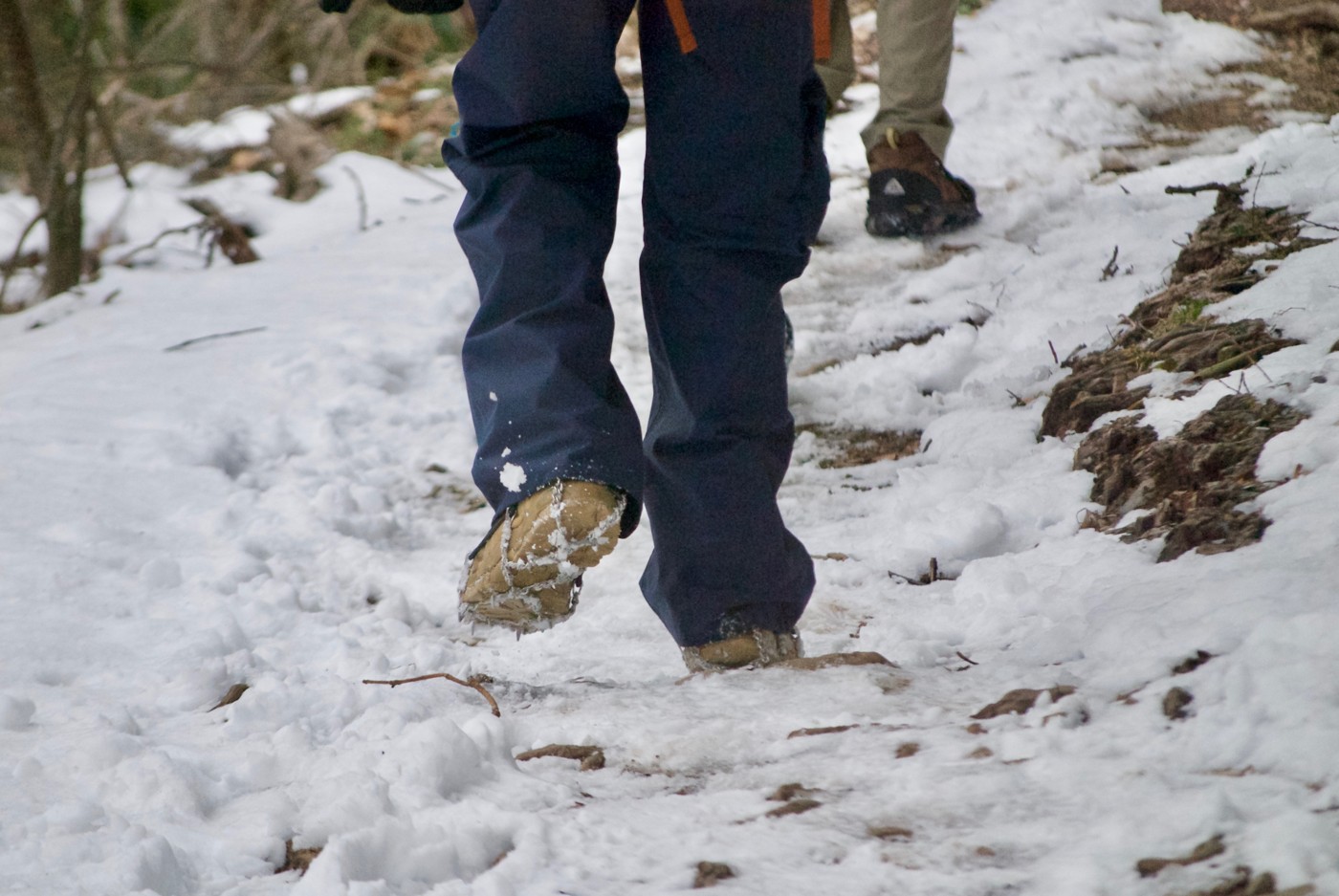
Practice putting them on before you need them. Yaktrax’s fitting guidance suggests sitting down, fitting the front over the toe, and securing the device around the heel. Use the instructions and size guide supplied with your own pair. Try the fit with the footwear you will actually wear, including boots if those are part of your travel outfit.
For a day that alternates between streets and museums, plan where you can safely remove and store the grips before entering. Carrying a small bag for them is a practical way to keep wet equipment away from the rest of your things. Do not make the doorway itself an obstacle for other visitors while you adjust your footwear.
If snow scenery is the goal, use our guide to Korea’s winter snow spots to choose a trip and read about trail preparation. City walking equipment should not be your whole plan for a mountain outing.
Staying Safe on Ice and in the Cold
Slow down before the slippery part, and choose a safer route whenever you can. Korea’s Ministry of the Interior and Safety, in winter guidance published on the Seoul city website, recommends low-heeled shoes with slip-resistant soles, steps about 10–20% shorter than usual, keeping your hands out of your pockets, not looking at your phone while walking, and carrying as little in your hands as possible. It also advises avoiding shaded spots, not turning sharply, and, if you do fall, getting low and sitting down or rolling to the side to reduce injury. The cold-health manual hosted by KMA also recommends avoiding icy paths, sloping roads, and uneven ground, and using elevators instead of stairs where available.
Turn those instructions into small decisions during your day: stop somewhere safe to read a message, take the elevator when the alternative is an exposed icy staircase, and accept a detour that avoids a slippery slope. Leave enough flexibility in your plans that missing a photo stop feels easier than rushing toward it.
Do not use a hot pack as a reason to keep walking when the cold is getting to you. Government cold-health guidance recommends limiting outdoor activity in very cold weather, wearing warm layers, eating regular meals, and drinking enough fluids. It also warns that alcohol increases cold-related risk. A drink that feels warming is not a substitute for getting into a warm place.
When someone needs help
Watch for shivering together with unusual tiredness, confusion, or slurred speech: the government cold-health guidance lists these among hypothermia symptoms. Move the person somewhere warm and seek urgent help; call 119 for an emergency. Remove wet clothing and cover the person with dry clothing or blankets. Do not give a drink to someone who is not fully conscious.
For suspected frostbite, get medical help and do not rub the affected area. The point for a traveler is to stop the outing and get help, rather than trying to carry on to the next attraction. If you are with a group, let someone stay with the affected traveler while another person asks staff for assistance.
Seoul’s winter street facilities
Seoul’s winter plan includes heated benches and windproof shelters. The city also plans heated, portable Ongi Stations at busy places including Gwanghwamun Square and Hongje Waterfall from December 2026 through February 2027. Those are planned outdoor rest facilities, distinct from the indoor museum and library visits below. Treat a heated bench as a welcome short rest when you find one, and build your longer warm-up around an indoor destination.
Warm Indoor Places in Seoul
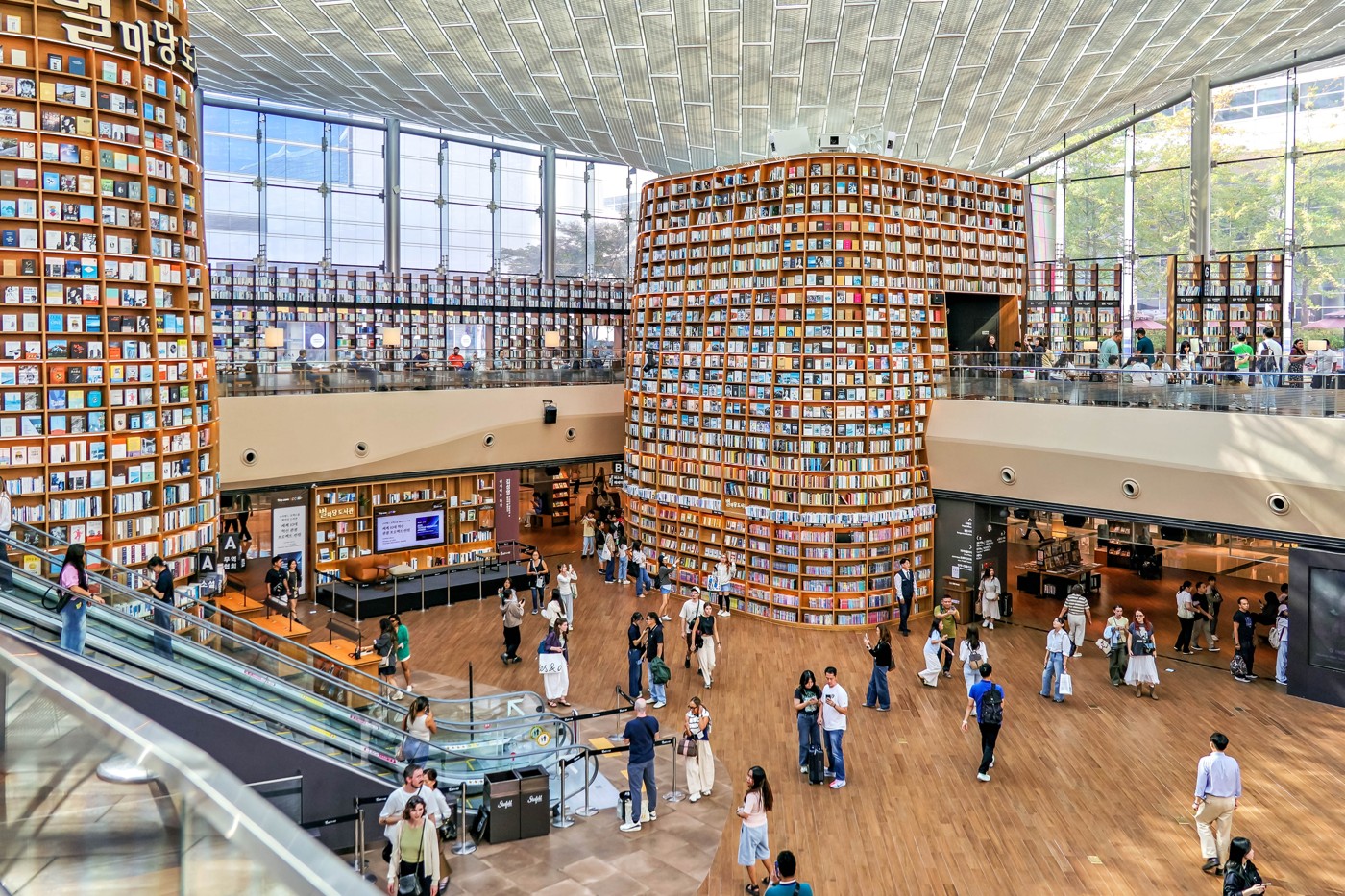
Pick an indoor stop that you would enjoy even in pleasant weather. That makes it easier to change the day’s plan when the wind picks up. These places offer indoor collections or reading space and have official subway directions. The museum entries below refer to the galleries, rather than their outdoor gardens or palace grounds; allow for the approach from the station.
| Place | Why | Hours | Admission | Station |
|---|---|---|---|---|
| Starfield Library, COEX | Books, reading tables, and the indoor mall | Daily 10:30–22:00; open year-round | Free | Samseong, Line 2, Exits 5–6; connecting passage |
| National Museum of Korea | Permanent collections and a spacious indoor visit | 09:30–17:30; Wed/Sat until 21:00 | Permanent collections free; some special exhibitions charged | Ichon, Line 4 / Gyeongui–Jungang, Exit 2 |
| Seoul Museum of Art, Seosomun | Art galleries near City Hall | Tue–Thu 10:00–20:00; Fri 10:00–21:00; winter weekends/holidays 10:00–18:00 | Free except special exhibitions | City Hall, Line 1, Exit 1; Line 2, Exits 10–12 |
| Seoul Museum of History | Exhibitions on Seoul’s history and culture | 09:00–18:00; Fri until 21:00 | Free | Gwanghwamun, Line 5, Exits 6–8 |
| National Palace Museum | Joseon royal collections beside Gyeongbokgung | 09:30–17:30; Sat and last Wed of month until 21:00 | Free | Gyeongbokgung, Line 3, Exit 5 |
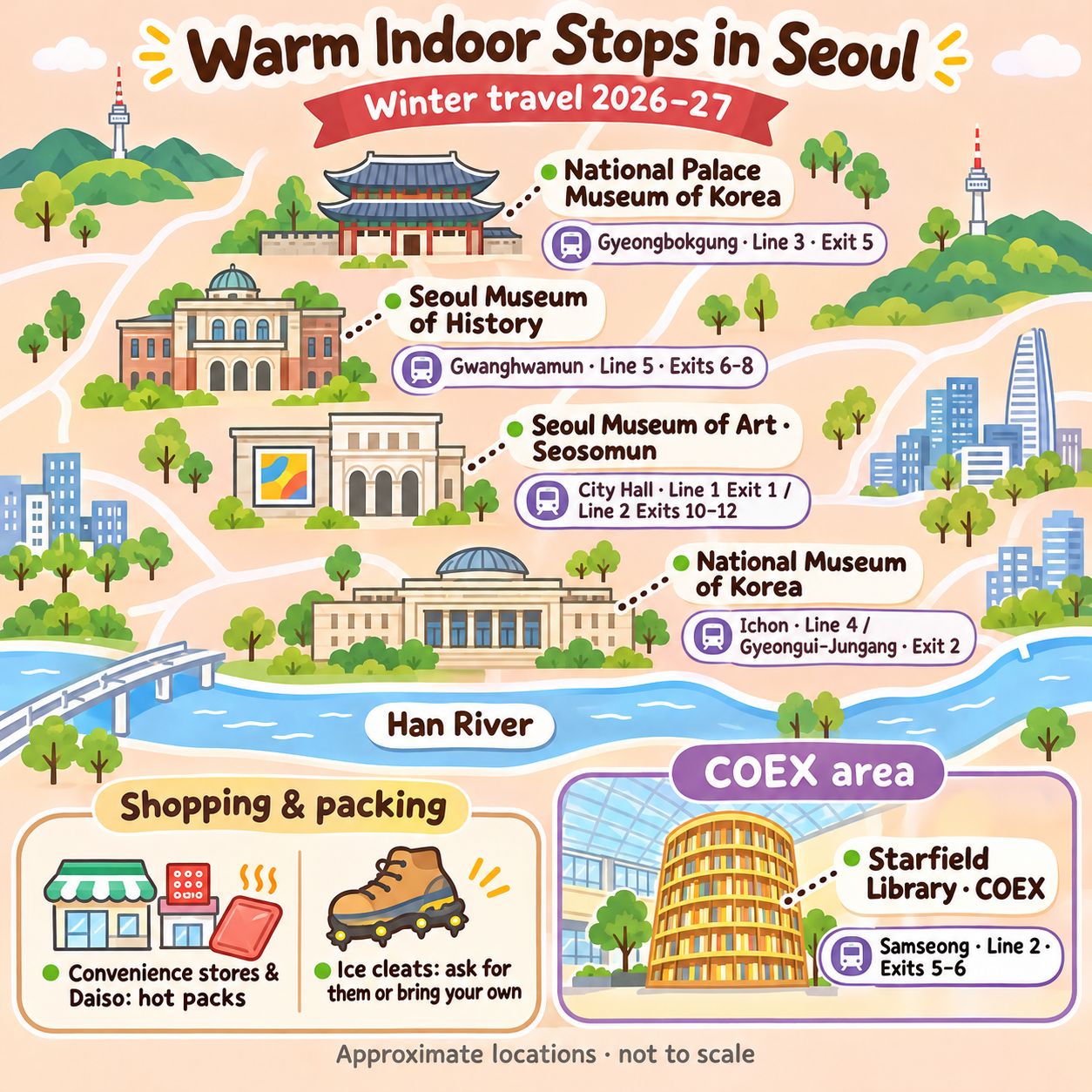
Starfield Library: a reading break in COEX
The library’s operator describes it as a space open to everyone, with tables for reading and laptop use. You can use the connecting passage by Samseong Station’s Exits 5–6 to enter COEX through Millennium Plaza. From Bongeunsa Station on Line 9, the operator also gives a connection via Exit 7 and ASEM Plaza. Choose this stop when you want an indoor setting with shops and places to eat around the library, without making a museum collection the main event.
National Museum of Korea: make the collections the outing
The permanent collection is free, and the museum lists free coat storage near the main entrance as well as lockers. That is useful when you have dressed for a much colder outdoor day. Regular last admission is at 17:00, or 20:30 on Wednesday and Saturday. The museum closes on January 1, Seollal, and Chuseok; the permanent and special galleries also close on the first Monday of March, June, September, and December. For this winter, remember the December closure pattern when choosing your museum day.
Seoul Museum of Art: a City Hall alternative
The Seosomun main branch combines exhibition galleries with shared spaces, a cafe, and an art bookstore. It closes on January 1 and on Mondays, except when a Monday is a public holiday, and last admission is an hour before closing. Its winter weekend closing time is earlier than the weekday one, so put the gallery visit ahead of dinner rather than leaving it until afterward.
Seoul Museum of History: spend time with the city’s story
The museum’s visitor facilities include a cafe and lockers, and its official visitor page lists audio guides in English, Korean, Japanese, and Chinese. It closes on January 1 and on Mondays, except when a Monday is a public holiday. Ordinary last admission is at 17:30, and on Fridays the museum stays open until 21:00. If you are planning a Friday evening visit in January or February 2027, look at the museum’s hours page for that year first. This is an option to build into a Gwanghwamun-area day when you want to spend less of it outdoors.
National Palace Museum: royal history indoors
The Palace Museum gives you an indoor visit beside Gyeongbokgung, reached from the station’s Exit 5. Regular last entry is at 17:00, extended to 20:30 on Saturdays and the last Wednesday of the month. It closes on January 1, Seollal, Chuseok, and the last Monday of each month; if that Monday is a public holiday, closure moves to the day after the holiday. Leave time to enjoy the royal collections rather than treating the building only as a place to warm your hands.
Tip
Choose your indoor anchor before leaving your room. On a Monday, Starfield Library may suit a flexible plan better than the Seoul Museum of Art or Seoul Museum of History, which both close on Mondays unless the Monday is a public holiday. For museums, allow time to enter before the admission cutoff.
Tips for Foreign Visitors
Plan the outdoor and indoor parts together. Write down the attraction you most want to see, a warm indoor alternative, and the station exit for each. On a cold day, shortening an outdoor walk is easier when you already have somewhere interesting to go. Keep the Korean place name with the English name so you can show staff your destination if you need help.
Make a small “before leaving” routine. Read the destination’s weather forecast and feels-like temperature, put on your gloves and hat, and decide whether today’s footwear suits the ground conditions. If you are carrying grips, keep them reachable. If the weather calls for a mainly indoor day, move the museum visit forward instead of waiting until everyone is cold and tired.
Use Korean shopping words to be specific. Save 핫팩 for hot packs, 손난로 for hand warmers, 붙이는 핫팩 for adhesive warmers, and 미끄럼방지 아이젠 for ice cleats. Bring the actual shoe when choosing a grip and keep each product’s instructions. A familiar-looking packet is less useful than one you know how to use safely.
Give every traveler a say in the pace. Official cold-health advice calls for particular care for children, older adults, and people with chronic conditions. Agree that anyone can ask for an indoor stop before you leave. A shorter shared outing with warm breaks can be a better day than completing a long list while someone quietly struggles with the cold.
For something warm between stops, our winter street-snack guide introduces seasonal favorites. Keep the food stop separate from your plan for a proper indoor break.
If you want the warm indoor experience to be the destination itself, read our jjimjilbang guide or plan a separate outing with the hot-springs guide. Both cover their own visiting details, so you can choose the experience that fits your trip.
Sources
- Cover photo: Changdeokgung Palace in snow, Korea.net / Korean Culture and Information Service (Jeon Han), via Wikimedia Commons; CC BY-SA 2.0 (resized)
- KMA: what the 1991–2020 climate normals mean
- KMA: climate-normal tables
- KMA: Climatological Normals of Korea, definitions and methodology (PDF)
- KMA: wind chill and wind-driven heat loss
- KMA-hosted government cold-wave and cold-health manual (PDF)
- Korea Consumer Agency: hot-pack burn prevention
- Daiso: November product announcement and hot-pack price
- BGF Retail / CU: winter supplies announcement
- Yaktrax: fitting and surface-safety instructions
- Hallasan National Park: ice-traction terminology and dry spare socks
- Seoul city (Seoul Trail): Ministry of the Interior and Safety icy-road fall prevention tips
- Dongdaemun district: winter and icy-road safety
- Seoul: comprehensive winter plan for 2026–27
- Starfield: library information
- Korea Tourism Organization: Starfield Library hours, holidays, and admission
- Starfield COEX: subway directions
- National Museum of Korea: hours, closures, admission, and facilities
- National Museum of Korea: subway directions
- Seoul Museum of Art: Seosomun visitor information
- Seoul Museum of Art: Seosomun hours and closures (Korean)
- Seoul Museum of History: current hours and closures (Korean)
- Seoul Museum of History: visitor facilities and audio guides
- Seoul Museum of History: subway directions
- National Palace Museum: admission and visitor information
- National Palace Museum: subway directions
- National Palace Museum: current Korean hours and closures
Last checked: November 26, 2026.