Travel
Seoul's 5 Best Traditional Markets for Food: Gwangjang, Tongin, Mangwon, Namdaemun and Noryangjin
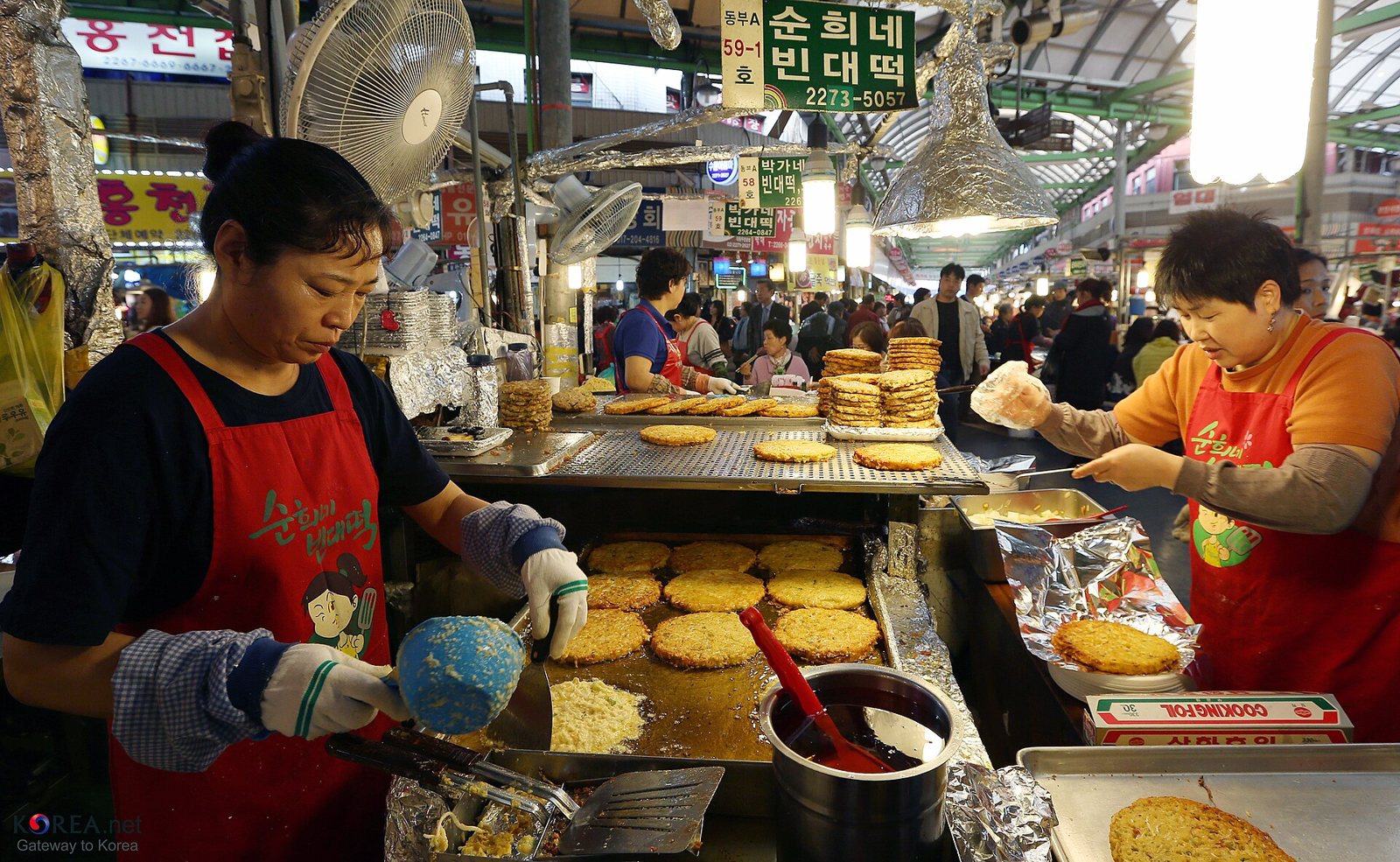
Top photo: frying bindaetteok at Sunhee-ne, Gwangjang Market. Photo: Korea.net / Korean Culture and Information Service, Wikimedia Commons, CC BY-SA 2.0

If you want to eat like a local in Seoul, go to a traditional market (sijang, 시장). They are cheap, busy and full of food you won't find in a hotel restaurant: crispy mung bean pancakes, little rice rolls, hand-cut noodles, and fish that was swimming a minute ago.
The five markets below are each famous for something different, and each is a short walk from a subway exit. Hours and prices were checked in October 2026; stall prices change, so treat them as a guide.
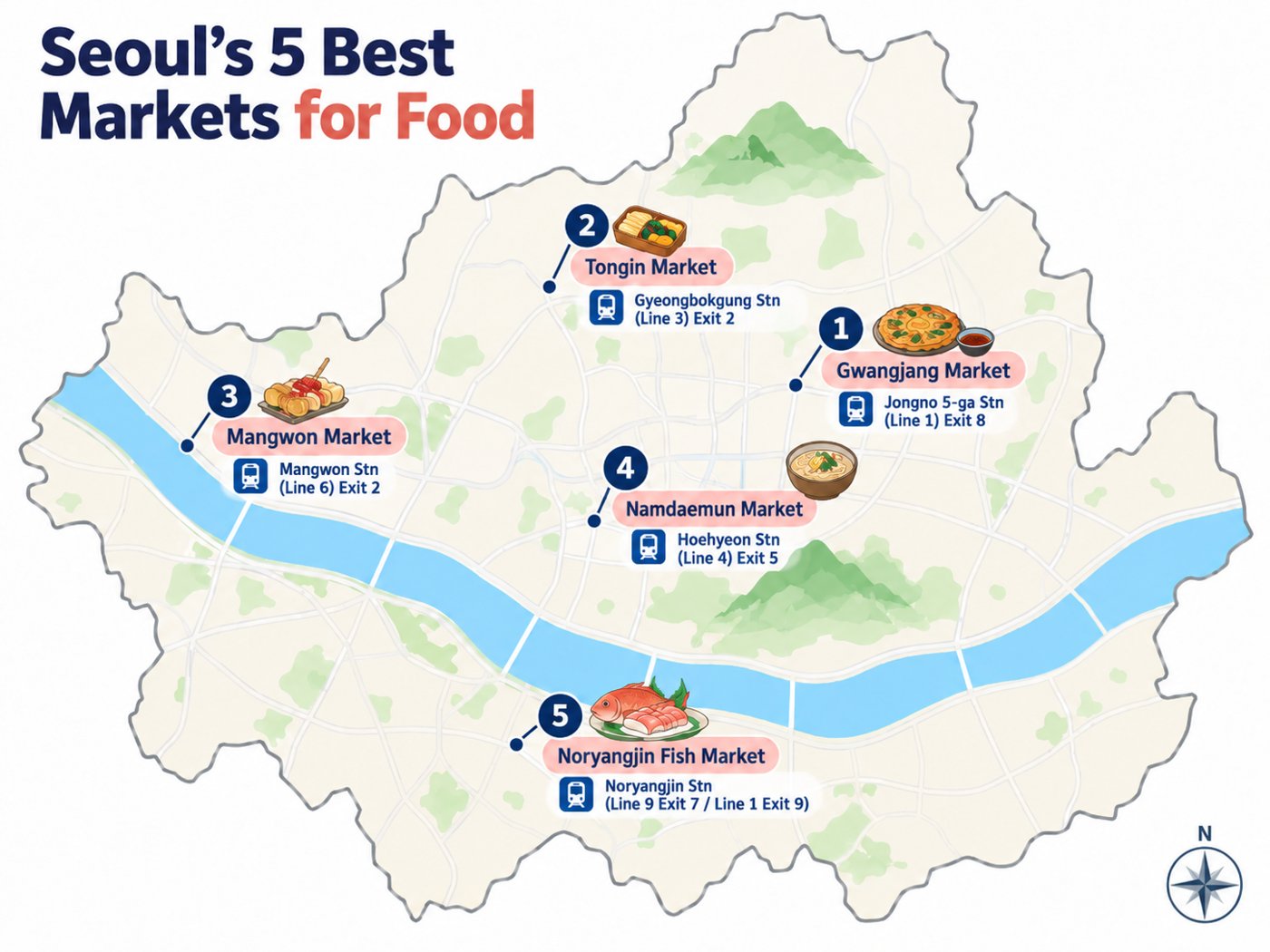
At a glance
1. Gwangjang Market: the classic, for mung bean pancakes, mini gimbap and beef tartare
2. Tongin Market: build your own lunch tray with old-style brass coins
3. Mangwon Market: the cheapest snacks, then a picnic by the Han River
4. Namdaemun Market: a noodle alley that opens at 6 a.m., and vegetable hotteok
5. Noryangjin Fish Market: choose live seafood downstairs, eat it upstairs
Bring: some cash (₩20,000–30,000); card acceptance varies by stall
Last checked: October 17, 2026
In this guide
- How these five were chosen
- The five compared
- 1. Gwangjang Market
- 2. Tongin Market
- 3. Mangwon Market
- 4. Namdaemun Market
- 5. Noryangjin Fish Market
- Market tips: cash, ordering, timing
- Sources
How these five were chosen
I looked for markets that Seoul's official tourism site singles out for food, that are within about five minutes' walk of a subway exit, and that are open most days. Then I picked five that feel different from each other: one classic street-food market, one with a unique lunch system, one local neighbourhood market, one huge wholesale market with a famous noodle alley, and one fish market.
I left out Dongdaemun's dakhanmari (whole chicken) alley because it's already in our night views guide, and Gyeongdong Market because it's better for herbs and produce than for a meal.
The five compared
| Gwangjang | Tongin | Mangwon | Namdaemun | Noryangjin | |
|---|---|---|---|---|---|
| Best for | Classic market street food | A DIY lunch tray paid in old-style coins | Cheap snacks with locals | Noodle alley and hotteok | Picking live seafood, eaten upstairs |
| Food hours | Food alley 09:00–23:00 daily | Market 07:00–21:00 (varies by shop); lunch cafe from 11:00 | 10:00–21:00 (varies by shop) | Noodle alley 06:00–21:00 | Retail every day; hours vary by section |
| Closed | Food alley: open all year | Lunch cafe: Tuesdays + 3rd Sunday | Varies by shop | Market closed Sundays (many food stalls open) | Retail open all year |
| Station | Jongno 5-ga (Line 1) exit 8 | Gyeongbokgung (Line 3) exit 2 | Mangwon (Line 6) exit 2 | Hoehyeon (Line 4) exit 5 | Noryangjin (Line 1 exit 9 / Line 9 exit 7) |
| Budget | ₩3,000–23,000 a dish | ₩500 a coin; budget about ₩10,000 | ₩1,000–1,500 snacks | ₩2,500–12,000 | Market price for fish + a table charge |
1. Gwangjang Market (광장시장)
Why go: Founded in 1905, it's one of Seoul's oldest markets and the most famous for food. The covered food alley in the middle is lined with stalls where you sit on a bench and eat what's cooked in front of you.
Must-try foods:
- Bindaetteok (빈대떡): a thick pancake of ground mung beans and vegetables, fried until crisp. Best with a bowl of makgeolli (rice wine).
- Mayak gimbap (마약김밥): finger-sized rice rolls with a mustard-soy dip. The name means “addictive gimbap”.
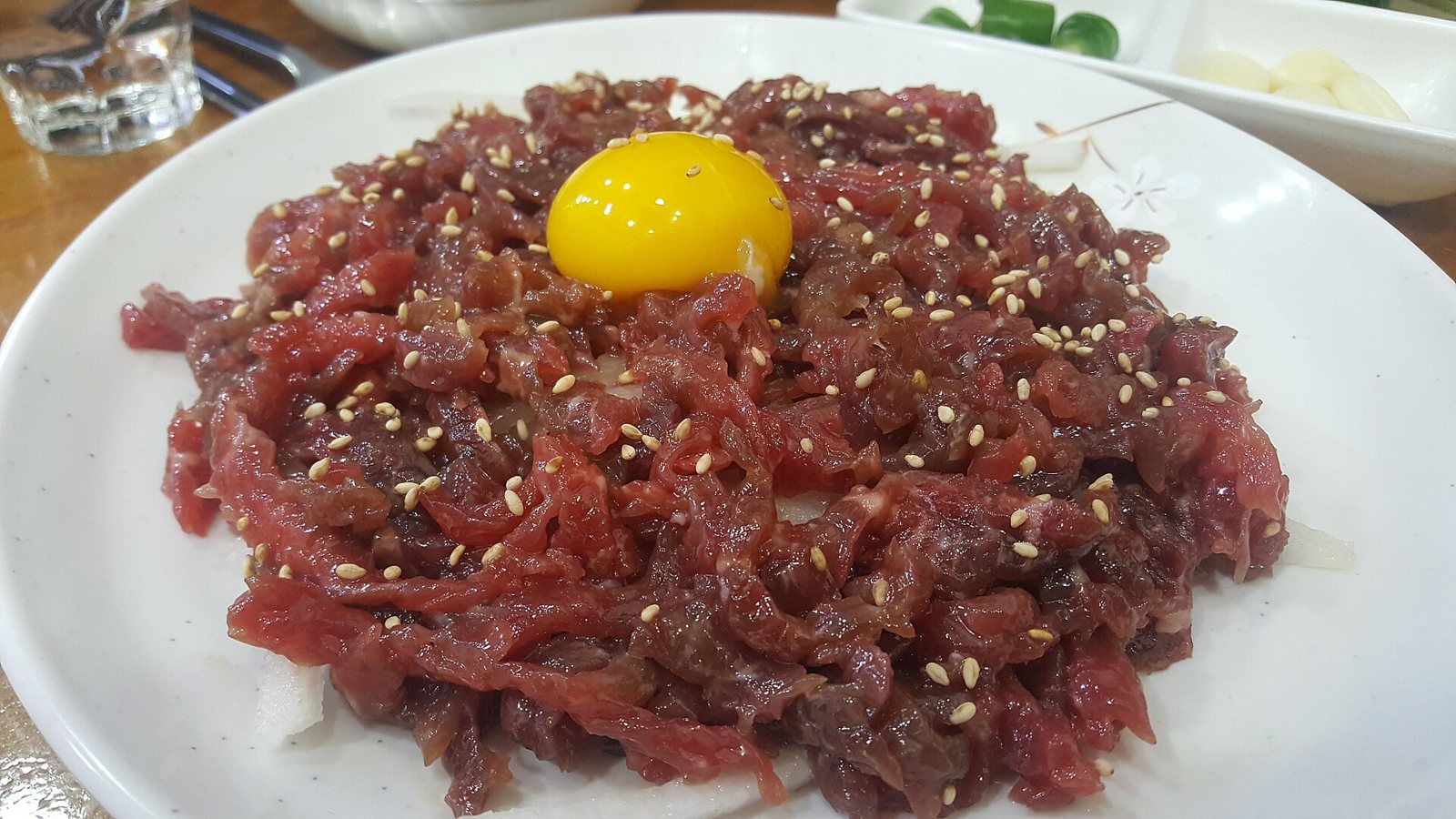
- Yukhoe (육회): Korean beef tartare, raw beef seasoned with sesame oil and pear, often with an egg yolk on top.
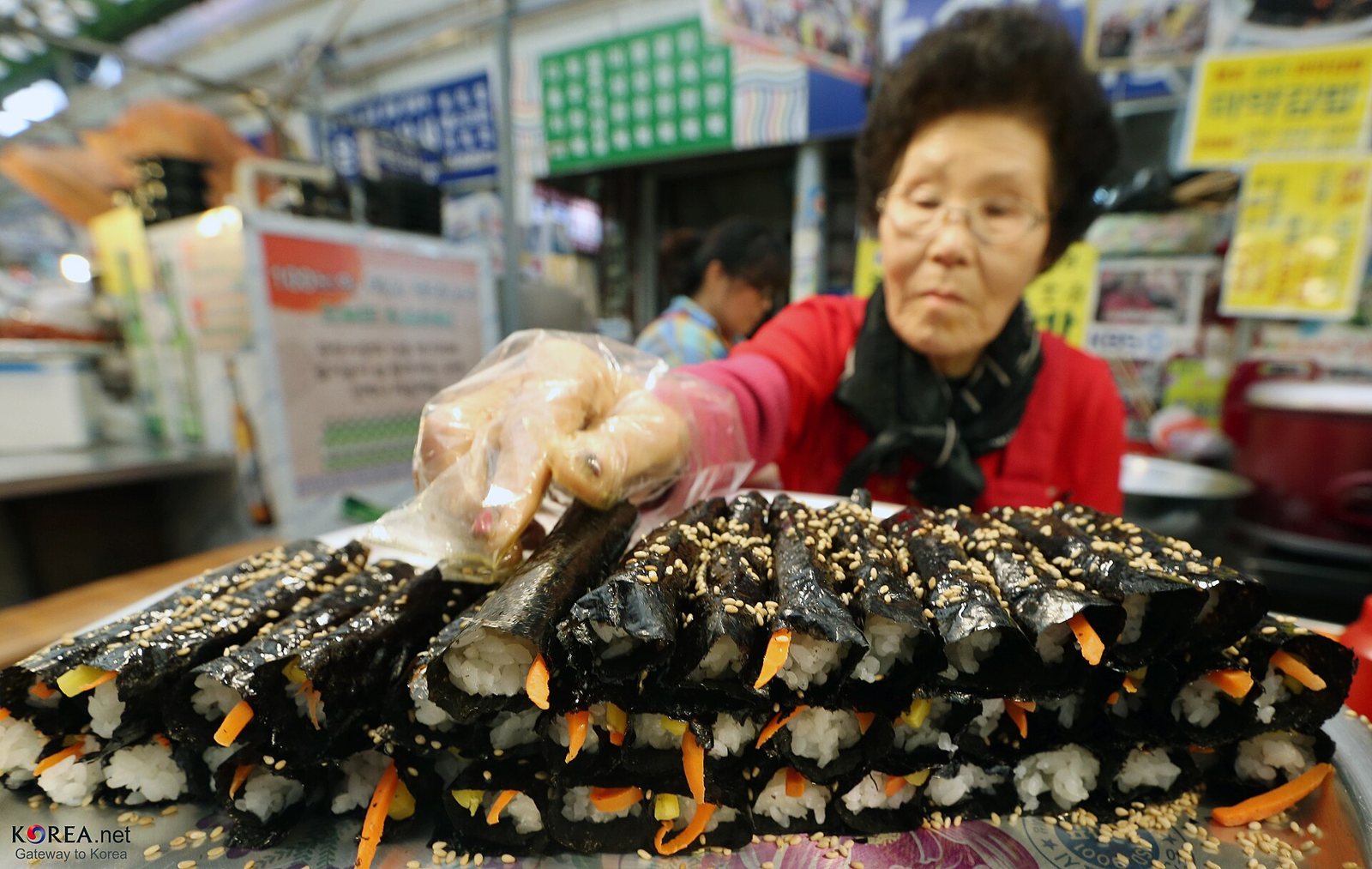
Prices and where to try them: At Sunhee-ne Bindaetteok (순희네빈대떡, 5 Jongno 32-gil, the stall in the top photo), a mung bean pancake is ₩6,000 and a meatball patty (gogi wanja) ₩4,000. Monyeo Gimbap (모녀김밥), which Seoul's tourism site calls the original mustard-dip gimbap stall, sells mayak gimbap for ₩3,000–4,000 (listings differ, so check the board). For yukhoe, Buchon Yukhoe (부촌육회 본점, 200-12 Jong-ro, in the yukhoe alley just outside the market) charges ₩23,000 for a plate and ₩11,000 for yukhoe bibimbap, and is open 10:00–21:30.
Hours: The food alley is open 09:00–23:00 every day. The rest of the market (fabrics, hanbok, vintage clothes) is closed on Sundays. Individual stalls set their own hours: Seoul's tourism site lists Sunhee-ne as 10:00–21:00, closed only on major holidays, while its Kakao Map listing shows 11:00–21:00 with Tuesdays off.
Getting there
Jongno 5-ga Station (Line 1) exit 8. The market entrance is about 60 m away.
Before you sit down
Check that the price is on the menu board before you order. After complaints about overcharging tourists, the city and Jongno-gu started inspecting prices, hygiene and stall practices in May 2026, including mystery shoppers who are foreigners.
2. Tongin Market (통인시장)
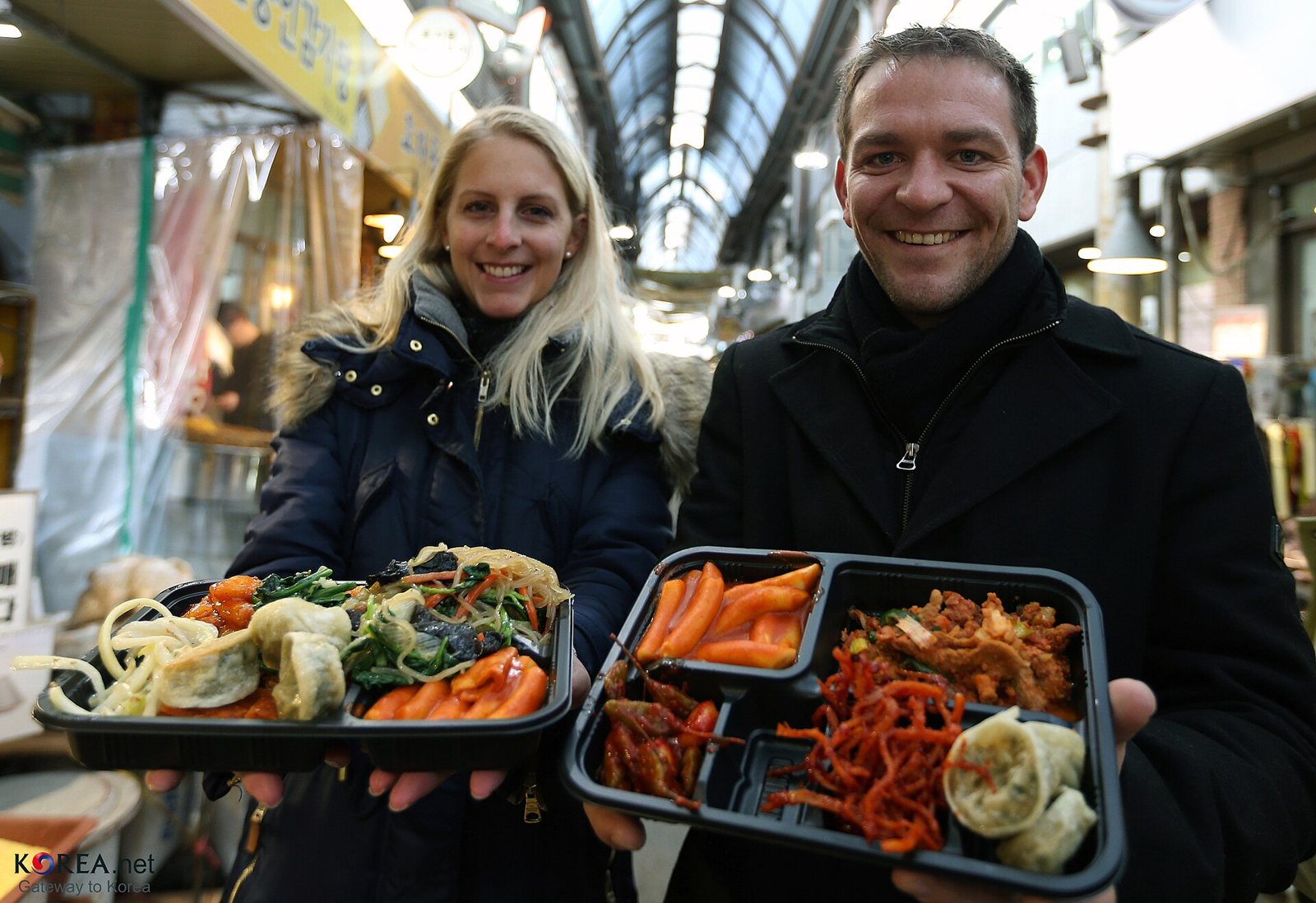
Why go: Tongin's “dosirak cafe” makes lunch a game. You swap cash for brass coins called yeopjeon (엽전), take a black plastic tray, and walk the market putting small portions from different stalls on it. Then you eat upstairs at the cafe. It's a short walk from Gyeongbokgung Palace.
Must-try foods:
- Gireum tteokbokki (기름떡볶이): rice cakes stir-fried in oil with chilli powder or soy sauce instead of the usual red sauce. Tongin is famous for it.
- Jeon (전): small pan-fried bites such as battered fish, vegetables or meat patties.
- Yeonipbap (연잎밥): sticky rice steamed in a lotus leaf, one of the dishes Seoul's tourism site suggests for your tray.
Prices and where to try them: Each coin is worth ₩500. What you spend depends on what you pick; in the city's own write-up, visitors changed ₩10,000 each, so budget about ₩10,000 per person. For gireum tteokbokki, Wonjo Jeong Halmeoni Gireum Tteokbokki (원조정할머니기름떡볶이, in the middle of the market, 02-735-7289) has been making it since 1987. The red (gochujang) and soy-sauce versions cost about ₩4,000–5,000 a portion, with a two-portion minimum. It's open 07:00–20:30.
Hours: The market itself runs roughly 07:00–21:00, but each shop sets its own hours. The dosirak cafe sells coins from 11:00 until 15:00 on weekdays and until 16:00 on weekends. The cafe itself is open 11:00–16:00 on weekdays and 11:00–17:00 on weekends. It is closed every Tuesday and on the third Sunday of each month. Market office: 02-722-0911.
Getting there
Gyeongbokgung Station (Line 3) exit 2, then about 5 minutes (500 m) on foot. The coin counter and dosirak cafe are in the customer centre in the middle of the market.
Make it a morning
See Gyeongbokgung Palace first, then walk over for an early lunch. Coins can only be used at participating stalls, so look for the sign.
3. Mangwon Market (망원시장)
Why go: This is a real neighbourhood market in Mapo, popular with young Seoulites, and the cheapest of the five. Seoul's tourism site recommends buying snacks here and taking them to Mangwon Hangang Park for a riverside picnic.
Must-try foods:
- Dakgangjeong (닭강정): bite-sized fried chicken glazed in a sticky sweet, soy or spicy sauce.
- Goroke (고로케): the Korean take on croquettes, fried bread rolls stuffed with vegetables, curry or cheese.
Prices and where to try them: Q's Dakgangjeong (큐스닭강정, 27 Mangwon-ro 8-gil), which Seoul's tourism site names as a market favourite, has half a dozen sauces. At Mangwon Sujae Goroke (망원수제고로케, 80 Mangwon-ro), croquettes cost ₩1,000–1,500 each, depending on the filling; it opens 09:00–21:00 and is listed as closed on Sundays.
Hours: About 10:00–21:00 every day, but each shop sets its own hours and days off.
Getting there
Mangwon Station (Line 6) exit 2. Turn right into the side street and walk straight for about 350 m (5 minutes).
Picnic by the river
Mangwon Hangang Park is a walk away from the market. Seoul’s tourism site suggests taking your snacks there for a picnic by the river.
4. Namdaemun Market (남대문시장)
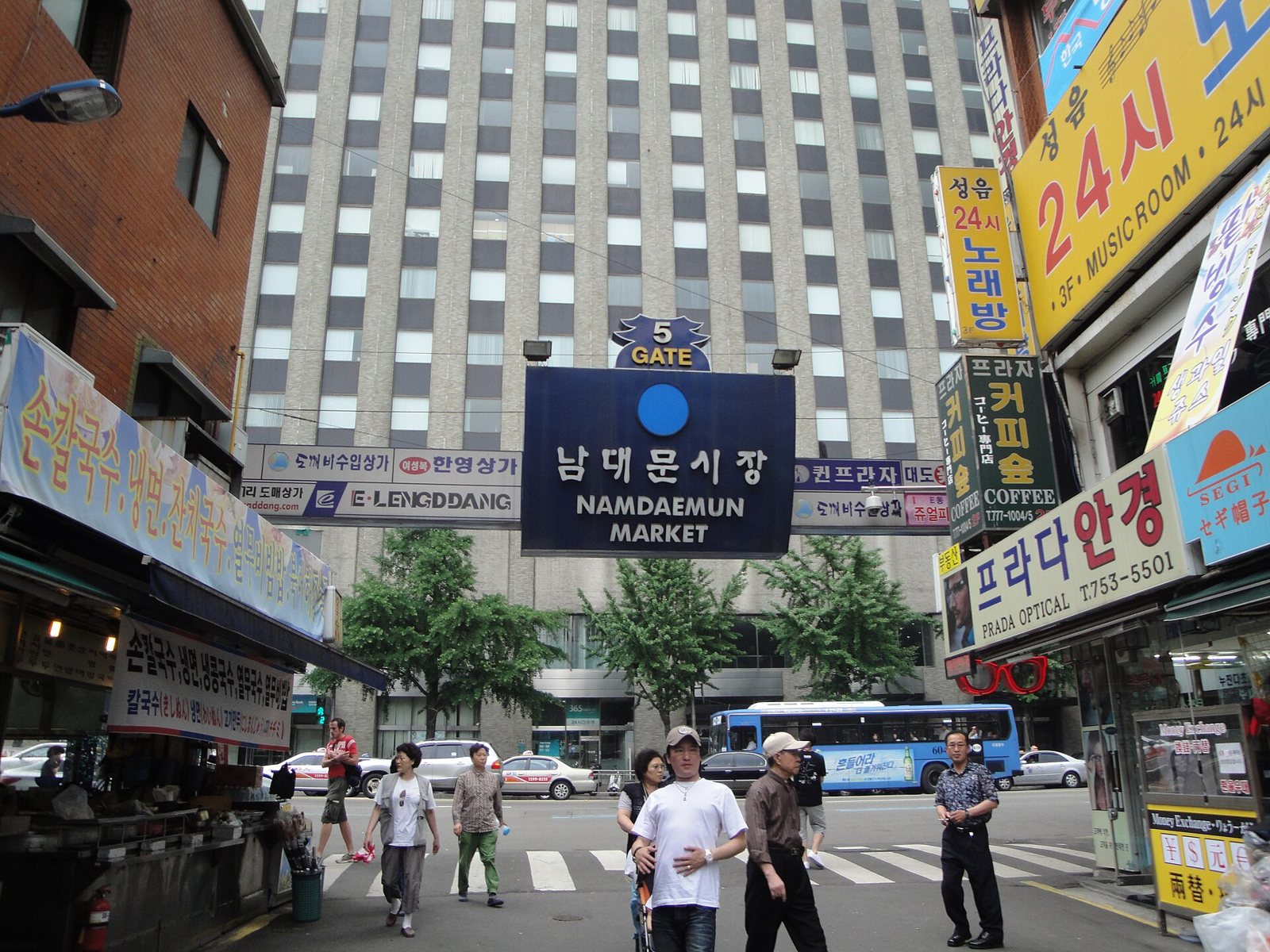
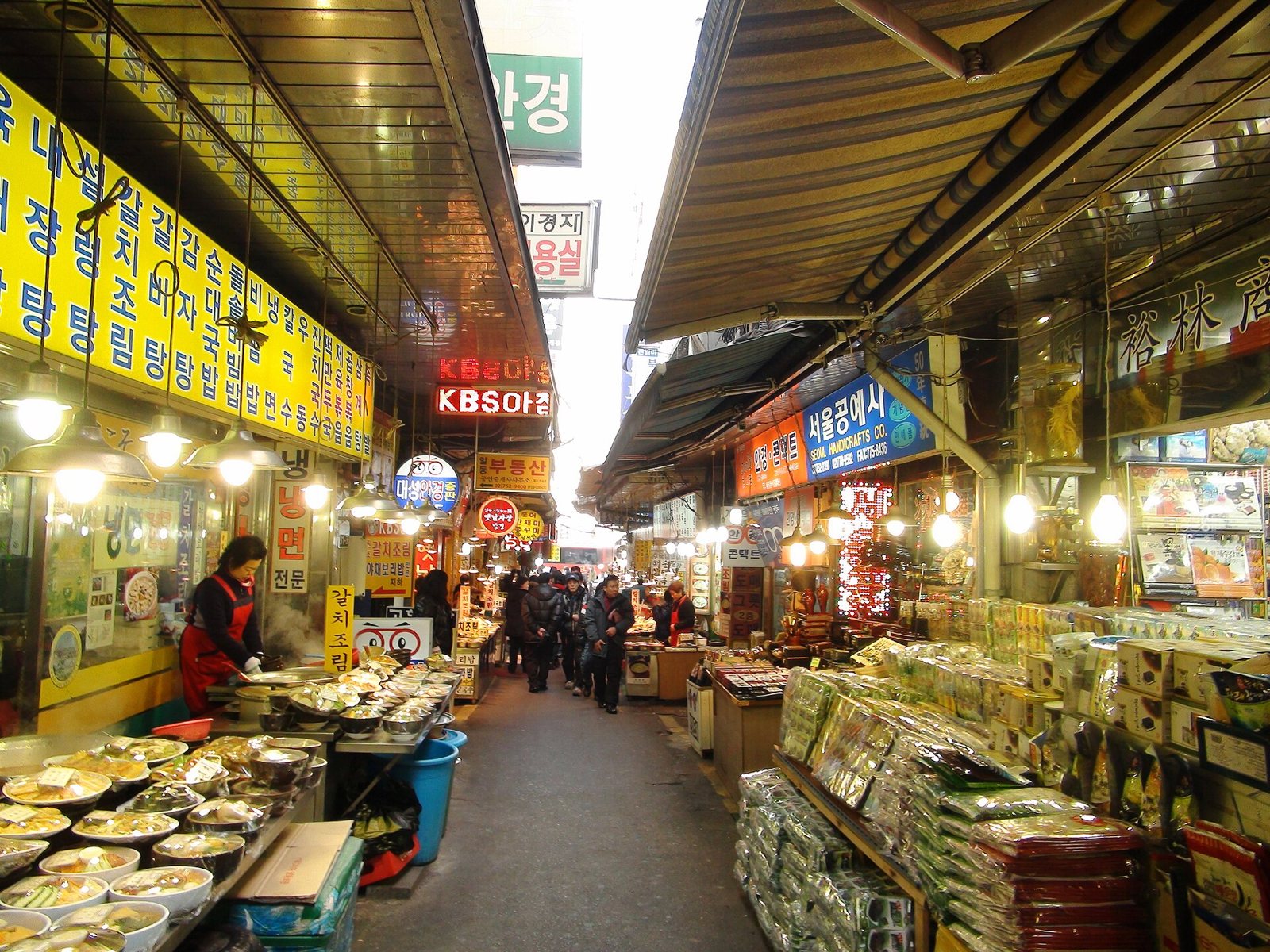
Why go: Korea's largest traditional market sells everything from kitchenware to ginseng, and it has a famous noodle alley. Every restaurant there brings you a free taste of a second dish with your order.
Must-try foods:
- Kalguksu (칼국수): thick hand-cut wheat noodles in an anchovy broth. Order a bowl and you also get a small bowl of cold noodles (naengmyeon).
- Boribap (보리밥): barley rice with vegetables to mix with gochujang. It comes with noodles on the side.
- Yachae hotteok (야채호떡): a fried pancake stuffed with glass noodles and vegetables, a savoury twist on the usual sweet hotteok.
Prices and where to try them: Namhae Sikdang (남해식당, 42-1 Namdaemunsijang 4-gil) is one of the best-known stalls in the noodle alley; its sets of kalguksu or boribap with cold noodles cost ₩9,000. For hotteok, Namdaemun Yachae Hotteok (남대문야채호떡, 12 Namdaemun-ro) charges ₩2,500 and is open from 08:00 to about 18:30.
Hours: According to the market's official site, the noodle alley is open 06:00–21:00. The wider market is closed on Sundays, according to Seoul's tourism site, though some food stalls still open.
Getting there
Hoehyeon Station (Line 4) exit 5 comes out right beside the market. Walk through Gate 5; the noodle alley is about 30 m in, on the left.
Go for breakfast
The noodle alley is busiest from about 11:00 to 14:00. Come earlier for a quiet bowl, then shop when the clothing stalls open.
5. Noryangjin Fish Market (노량진수산시장)
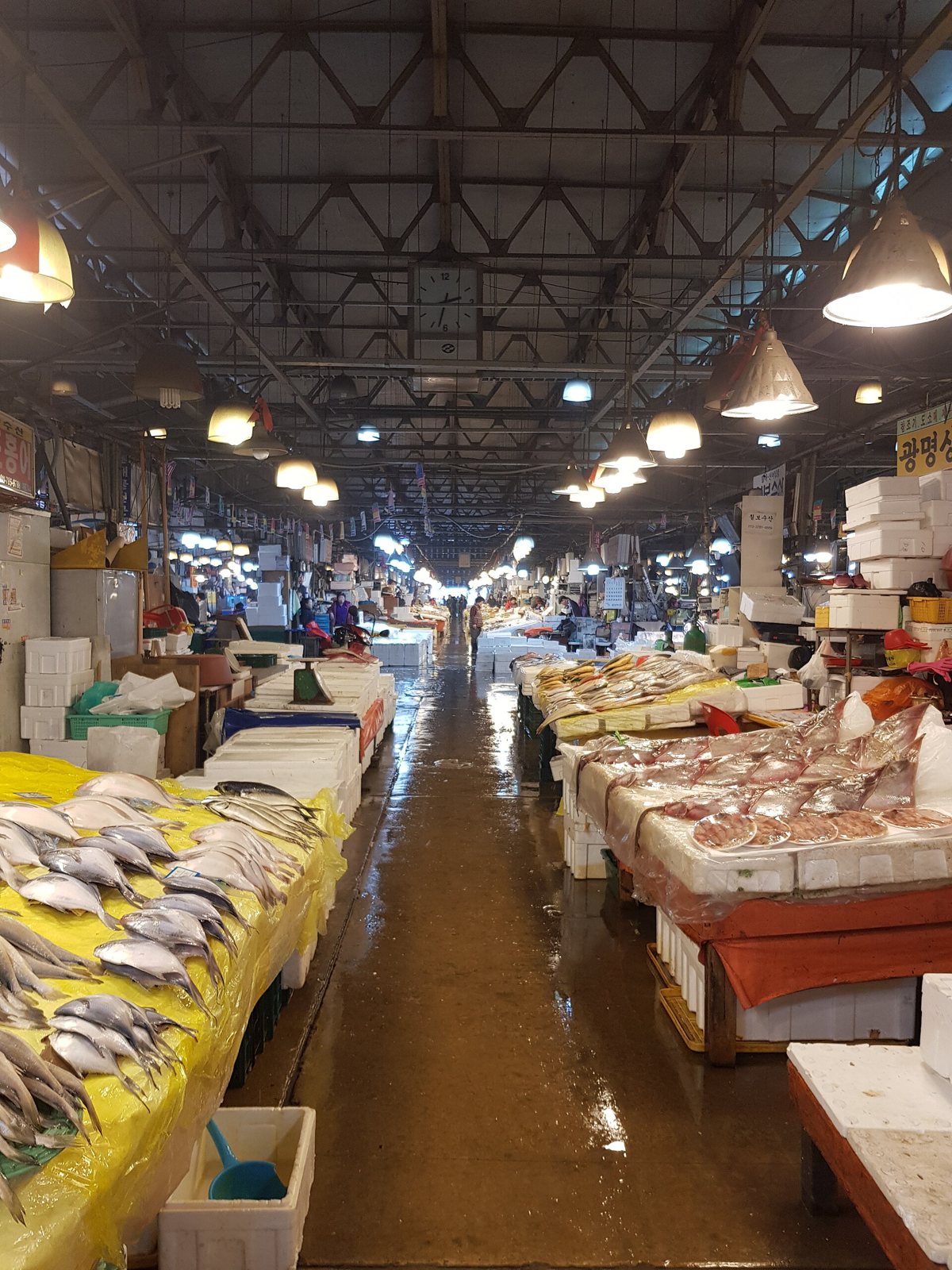
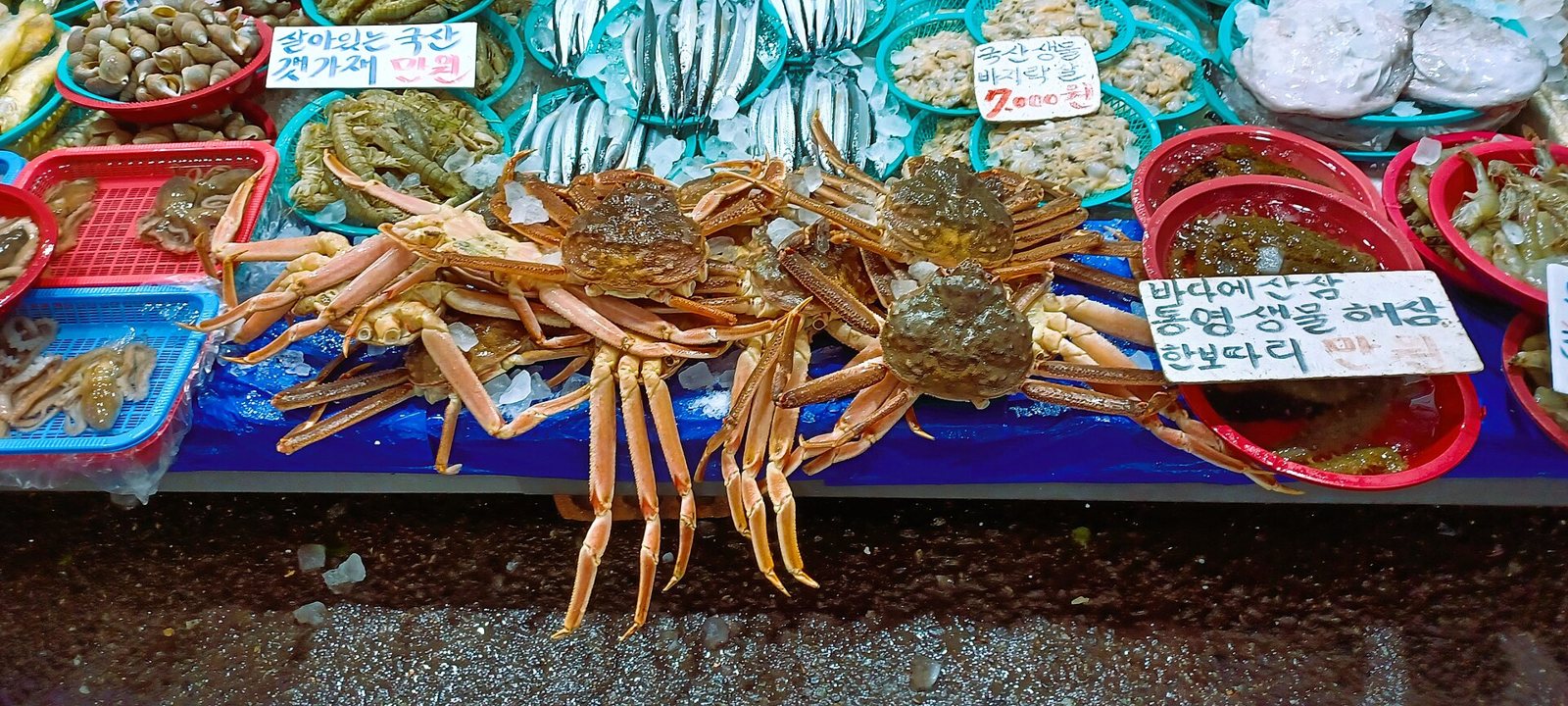
Why go: Seoul's big wholesale fish market is also open to the public. You choose live fish, crab or shellfish from a stall on the ground floor, the seller prepares it, and a restaurant upstairs serves it with side dishes. It's a great show if you like seafood.
Must-try foods:
- Hoe (회): Korean-style raw fish, eaten with lettuce, garlic and spicy chogochujang sauce.
- Maeuntang (매운탕): a spicy stew the restaurant makes from the leftover fish bones.
Prices and where to try them: Seafood is sold at the day's market price, by weight, so ask the price before the seller starts cutting. Upstairs restaurants (chojangjip, 초장집) charge a per-person table fee for setting up your meal, plus extra for stew and drinks. One example is Susan Hoegwan (수산회관), on the second floor, which is open 10:00–23:00.
Hours: Retail sales run every day of the year, according to the market operator. Hours vary by section: live and fresh fish from 01:30 to 22:00, while the premium section never closes. The wholesale auctions, which run overnight, are closed on Sundays and major holidays.
Getting there
Noryangjin Station. From Line 9, take exit 7, walk straight about 70 m and go through the underpass. From Line 1, take exit 9 and walk straight about 150 m.
How to order
Agree a price first, then tell the seller you want to eat upstairs. They will take your order to a restaurant, or point you to one. Ask the restaurant for its per-person charge before you sit.
Market tips: cash, ordering, timing
- Cash: Card acceptance varies from stall to stall, and some take only cash or a Korean bank transfer. Carry ₩20,000–30,000 in small notes.
- Ordering: Point at what you want, and check the price board. Most stalls serve small portions, so you can share and try several things.
- Timing: Weekday mornings and mid-afternoons are quietest. Lunchtime and Saturday evenings are packed, especially at Gwangjang.
- Finding stalls: Search the Korean name in Naver Map or Kakao Map; see our essential apps guide. For getting around, see our subway tips.
Sources
- VisitSeoul, Gwangjang Market and Sunhee-ne Bindaetteok: hours, closing days, foods, station exit
- Seoul Metropolitan Government, Gwangjang Market inspections (May 20, 2026)
- Seoul Metropolitan Government, Tongin dosirak cafe and VisitSeoul, Tongin Market: coin value, hours, closing days
- VisitSeoul, Mangwon Market and Mapo-gu Office: hours, directions
- Namdaemun Market official site, noodle alley and VisitSeoul, Namdaemun Market
- Noryangjin Fisheries Wholesale Market, hours and directions
- Kakao Map, Siksin and Diningcode listings for individual stalls: addresses, hours and menu prices, checked October 17, 2026