Travel
Gyeongju in Autumn: A 1–2 Day Itinerary from Seoul (Bulguksa, Daereungwon and Wolji Pond at Night)
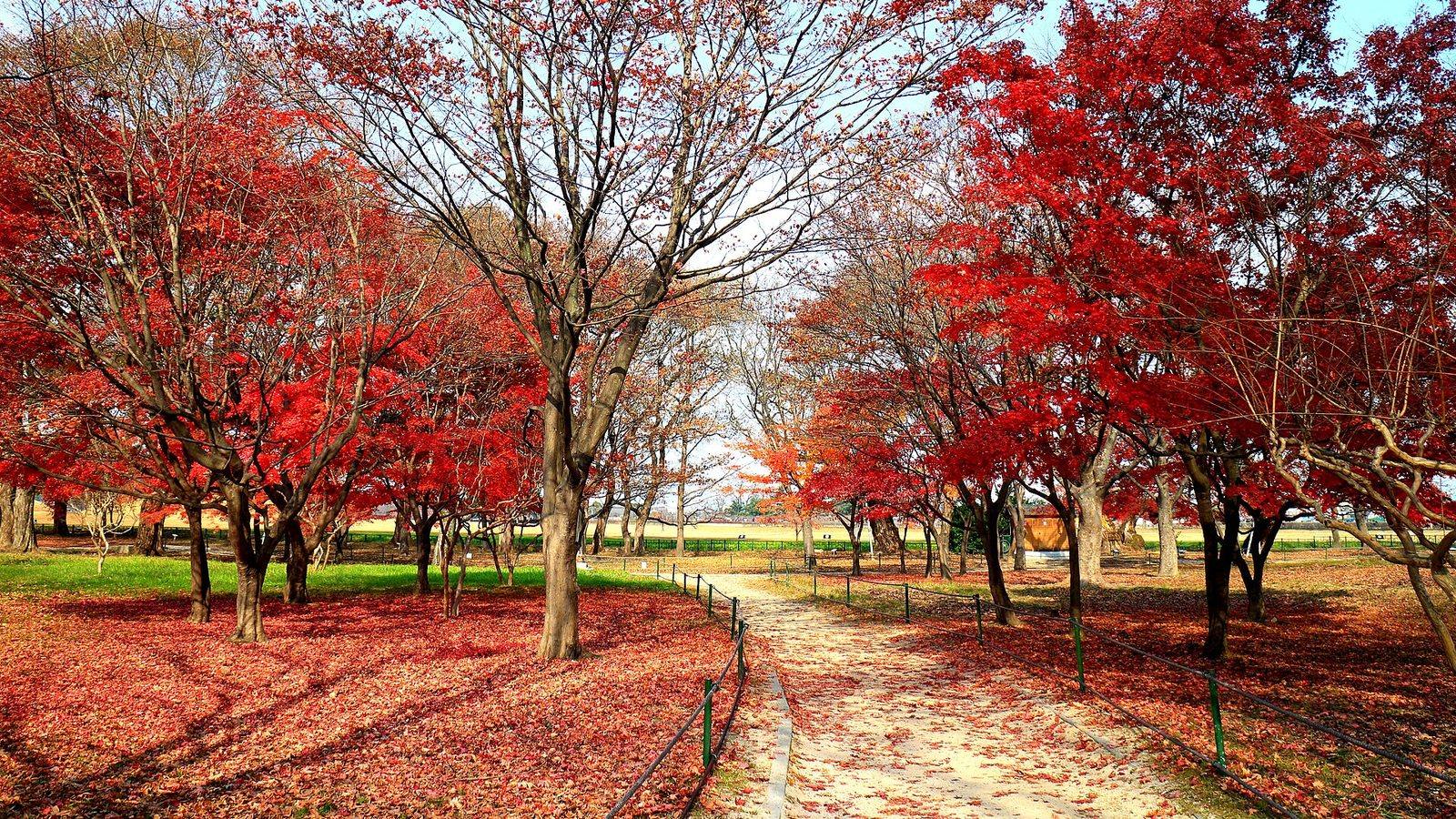
Top photo: maples near Gyerim Forest in late November. Photo: Amlou2518, Wikimedia Commons, CC BY-SA 4.0

Royal tombs, a 1,300-year-old temple and a palace pond lit at night, about two hours from Seoul by KTX
Gyeongju (경주) was the capital of the Silla kingdom for almost a thousand years, and much of it still sits in the middle of the modern city: grassy royal tombs you can walk between, an ancient stone observatory, and a palace pond that glows after dark. In autumn the maples at Bulguksa Temple (불국사) and around the old city turn red and the ginkgo trees turn gold, usually from early to mid November.
This guide is a plan for one or two days. Day 1 is all on foot in the historic centre and ends at Donggung Palace and Wolji Pond (동궁과 월지) at night. Day 2 takes the city bus out to Bulguksa and Seokguram Grotto (석굴암), then back via the Gyeongju National Museum or Bomun Lake. If you only have one day, do Day 1 and add Bulguksa in the morning.
At a glance
From Seoul: KTX from Seoul Station to Gyeongju Station about 2 hours 10 minutes, ₩44,500 one way
Day 1 (on foot): Daereungwon → Cheomseongdae and Gyerim → Gyochon and Woljeonggyo → Hwangnidan-gil → Donggung and Wolji at night
Day 2 (by bus): Bulguksa → Seokguram → Gyeongju National Museum or Bomun Lake
Autumn colours: usually early to mid November
Costs: most sights are free; Donggung and Wolji ₩3,000, Cheonmachong tomb ₩3,000; city bus ₩1,500
Last checked: October 20, 2026
In this guide
- Getting There from Seoul
- Getting Around Gyeongju
- The Itinerary at a Glance
- Day 1: the Historic Centre on Foot
- Day 2: Bulguksa and Seokguram
- Where to Eat · Where to Stay
- Tips for Visitors · Sources
Getting There from Seoul
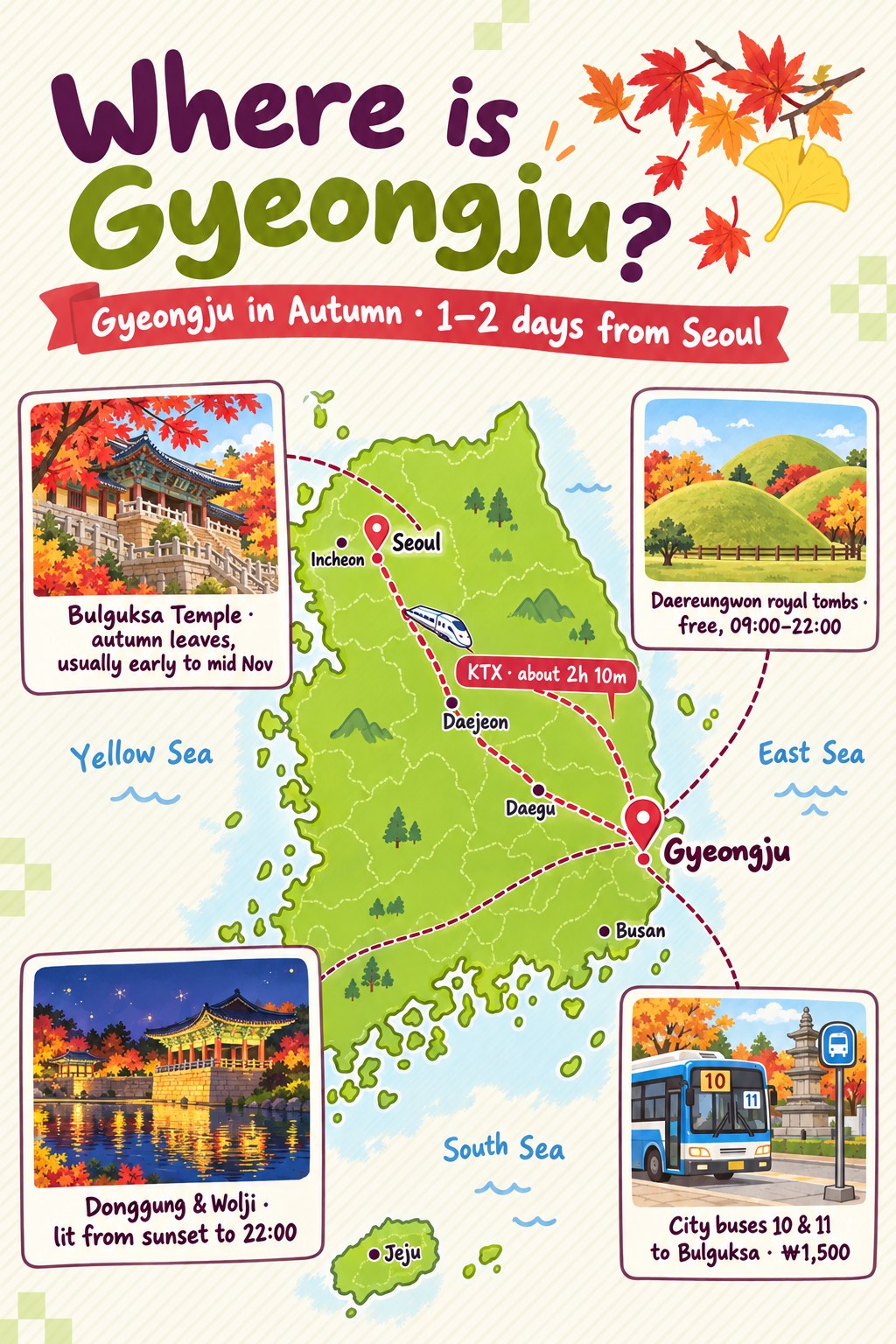
The fastest way is the KTX high-speed train to Gyeongju Station (경주역, formerly Singyeongju). The station is outside the city, about 10 km by road south-west of the historic centre, so add a bus or taxi ride at the end. Express buses are cheaper and go straight into town, but take longer.
| From Seoul | To Gyeongju |
|---|---|
| KTX from Seoul Station | 24 to 27 trains a day depending on the day of the week, from 05:13 to 21:33 · usually about 2 hours 10 minutes (fastest just under 2 hours) · ₩44,500 standard class |
| KTX from Suseo Station | Up to 21 trains a day, from 05:30 to 21:00 · about 2 hours 5 minutes · ₩42,900 standard class |
| KTX-Eum from Cheongnyangni | About 10 trains a day via the Jungang Line · about 2 hours 45 minutes · ₩42,900 |
| Express bus | Seoul Express Bus Terminal (Gyeongbu Line) → Gyeongju Express Bus Terminal · about 3 hours 30 minutes · nine departures on a November weekday, 06:50–22:00 · deluxe ₩36,700, premium ₩47,700 |
Coming back, the last KTX from Gyeongju to Seoul Station leaves at 22:38, so you can stay for the night lights at Wolji Pond on a day trip. Some trains run only on certain days of the week, so book your seats on the Korail website or app once your dates are set.
From Gyeongju Station into town
| Option | Details |
|---|---|
| City bus 50 or 70 | From the stop in front of the station to the bus terminals, Hwangnidan-gil (서라벌사거리·황리단길 stop) and Jungang Market · 05:00–22:55, no more than 25–30 minutes apart · ₩1,500 cash, ₩1,450 by card |
| Taxi | About 10 km to Hwangnidan-gil and Daereungwon, around 12 minutes without traffic |
The express and intercity bus terminals are already in town, about a 10-minute walk from Hwangnidan-gil.
Luggage
Lockers at Gyeongju Station cost ₩1,000–2,500 for two hours, and the express bus terminal keeps bags from 06:00 to 21:00 for ₩2,000–5,000. On Day 2, the Gyeongju National Museum will hold your bags free while you visit.
Getting Around Gyeongju
The historic centre is compact: from Hwangnidan-gil to Wolji Pond is about 2 km, and the whole Day 1 route is a walk of about 6 km with stops. For Bulguksa and Seokguram on Day 2 you need the bus or a taxi.
| Bus | Route and times |
|---|---|
| 10 and 11 | Loop buses between town and Bulguksa: Hwangnidan-gil, the bus terminals, Wolseong-dong (for Cheomseongdae), Bunhwangsa, Bomun Lake resort, Bulguksa, Tongiljeon, the National Museum and Donggung and Wolji. Bus 10 goes out via Bomun Lake and comes back via the museum; bus 11 runs the other way. About 06:00–22:00, with gaps of up to 40–50 minutes · town to Bulguksa about 35–45 minutes |
| 12 | Shuttle between Bulguksa and the Seokguram parking area · from Bulguksa 08:40 to 16:40, with gaps of up to 80 minutes |
| Fare | ₩1,500 cash, ₩1,450 by card (Korean transit cards work) · one free transfer within 30 minutes by card |
Gyeongju's public bikes need a Korean residence card to register, so they are not an option for most short-term visitors.
The Itinerary at a Glance
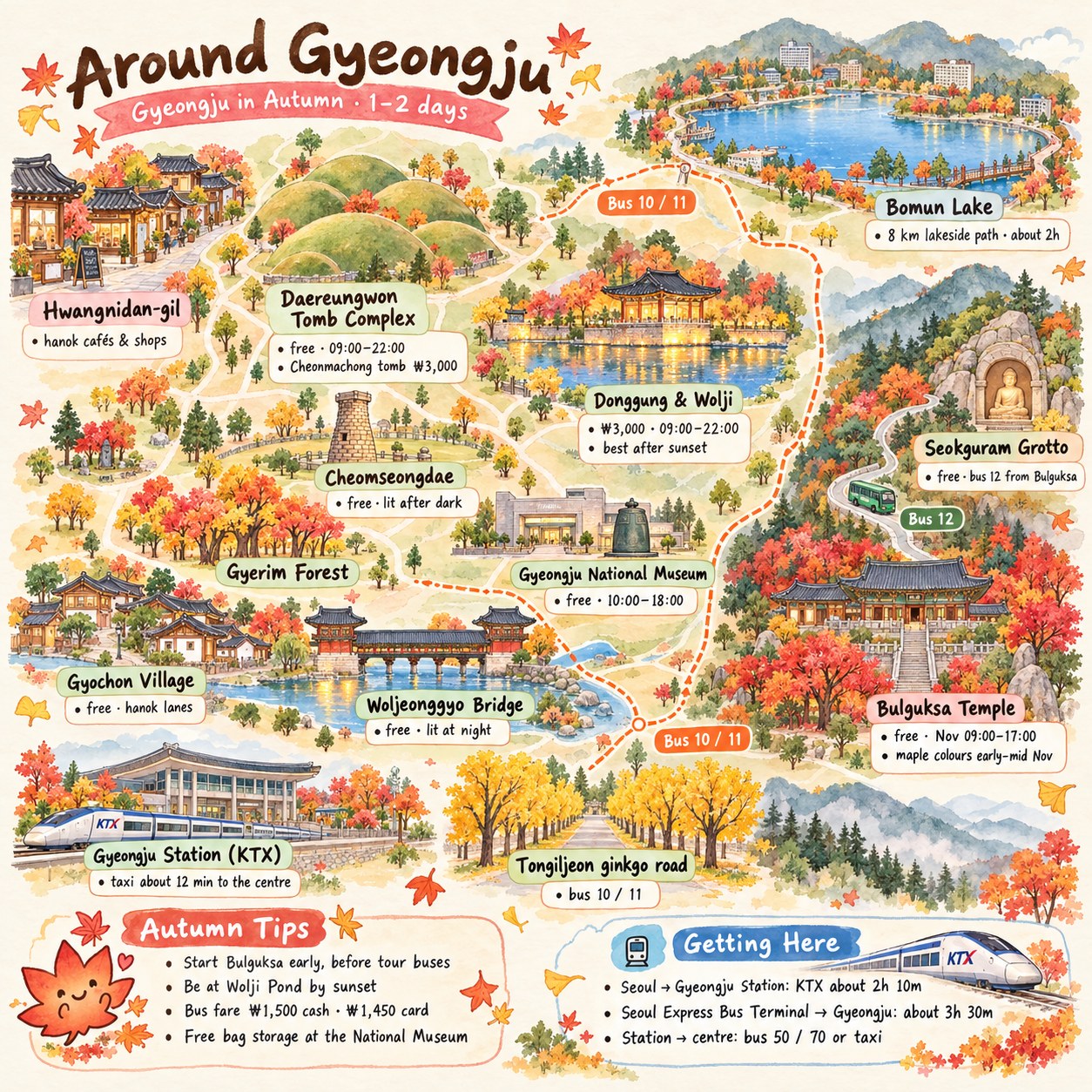
Day 1: the historic centre on foot
| Time | Plan |
|---|---|
| 10:00 | Daereungwon Tomb Complex, with Cheonmachong tomb (1 to 1.5 hours) |
| 11:30 | Walk about 15 minutes to Cheomseongdae, then on to Gyerim Forest |
| 12:30 | Gyochon Village and lunch, then Woljeonggyo Bridge |
| 14:30 | Back to Hwangnidan-gil for cafés and a snack of Hwangnam-ppang |
| 16:30 | Walk or take a short taxi ride to Donggung and Wolji; arrive before sunset |
| After dark | The palace and pond lit up; dinner near Hwangnidan-gil or the Jungang night market |
Day 2: Bulguksa, Seokguram and the museum
| Time | Plan |
|---|---|
| 08:30 | Bus 10 or 11 from town to Bulguksa (about 35–45 minutes) |
| 09:15 | Bulguksa Temple and its autumn maples (1.5 to 2 hours) |
| 11:30 | Bus 12 or a taxi up to Seokguram Grotto, then back down to Bulguksa |
| 13:30 | Lunch, then bus 10 toward the museum and town |
| 14:30 | Gyeongju National Museum (free), or Bomun Lake for a lakeside walk |
| Evening | KTX back to Seoul |
Day 1: the Historic Centre on Foot
Daereungwon Tomb Complex (대릉원)
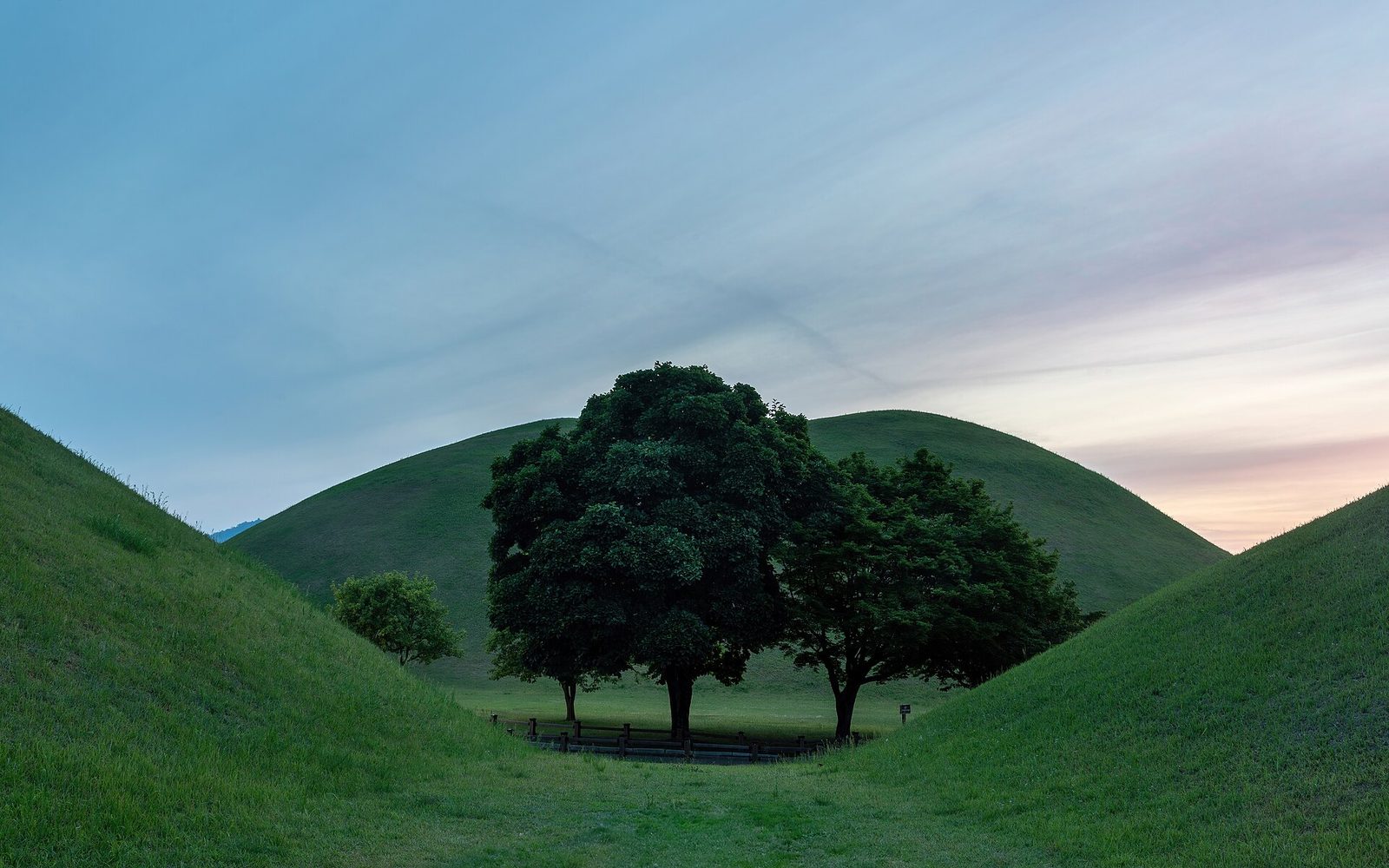
Huge grass-covered burial mounds of Silla kings and queens fill this park in the middle of town, with paths and old trees between them. Inside Cheonmachong (천마총), one of the tombs, you can walk into the burial chamber and see how the mounds were built.
Hours and admission: Free to enter the park, open 09:00–22:00 (ticket sales close at 21:30). Cheonmachong costs ₩3,000 for adults, ₩2,000 for ages 13–18 and ₩1,000 for ages 7–12; children 6 and under and visitors 65 and over go free.
Tip: Daereungwon and Cheomseongdae are both open until late, so you can also save them for the evening and do Gyochon first.
Cheomseongdae (첨성대) and Gyerim Forest (계림)
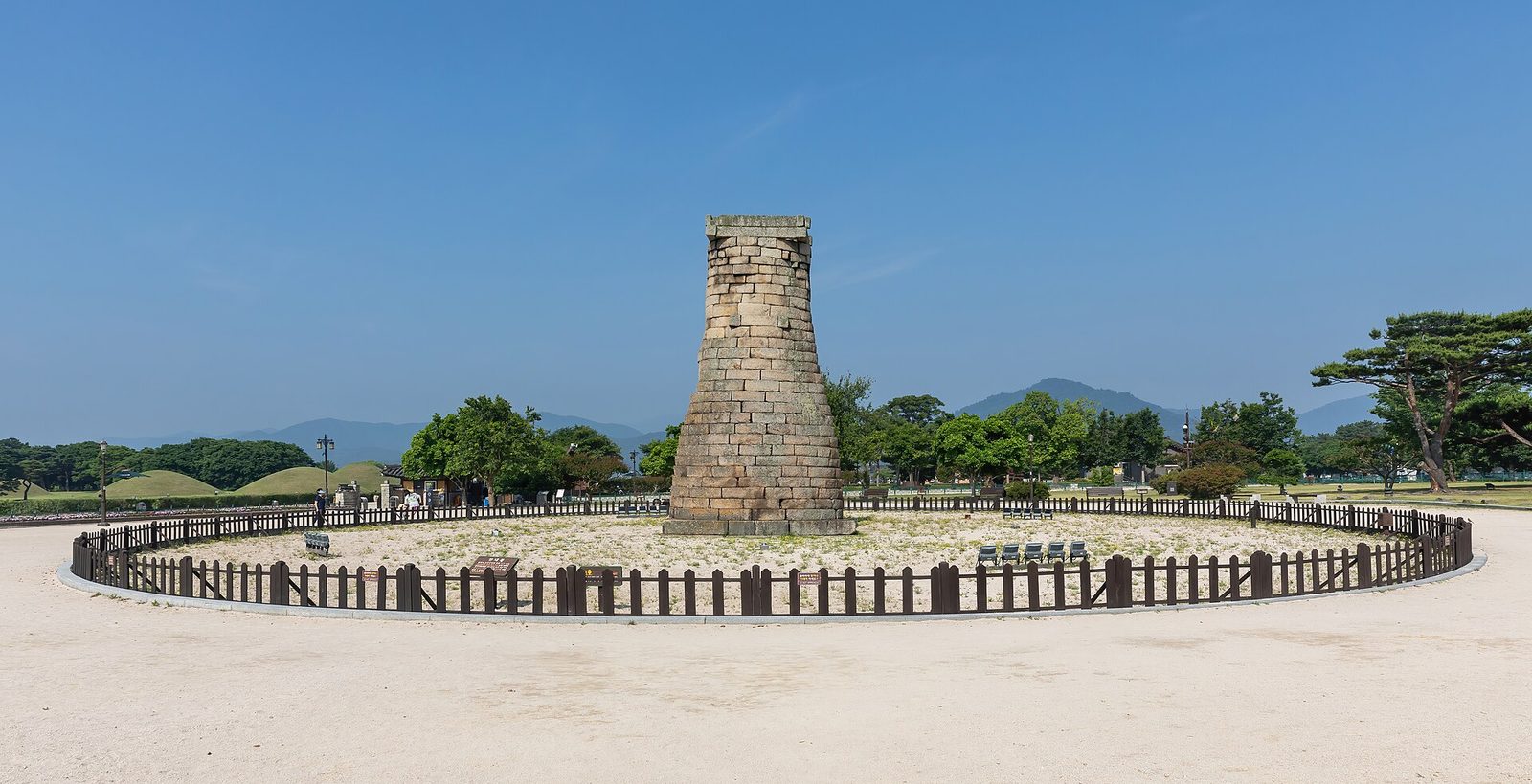
Cheomseongdae is a small, bottle-shaped stone tower from the 7th century, often called the oldest surviving observatory in East Asia. It stands in an open lawn about 15 minutes' walk from Daereungwon. A few minutes further south is Gyerim, an old grove tied to the founding legend of the Gyeongju Kim clan, and one of the city's prettiest autumn spots. The top photo of this guide was taken nearby.
Hours and admission: Cheomseongdae is free and open 09:00–22:00 (until 21:00 in winter). It is lit after dark, so you can also come back in the evening.
Gyochon Village (교촌마을) and Woljeonggyo Bridge (월정교)
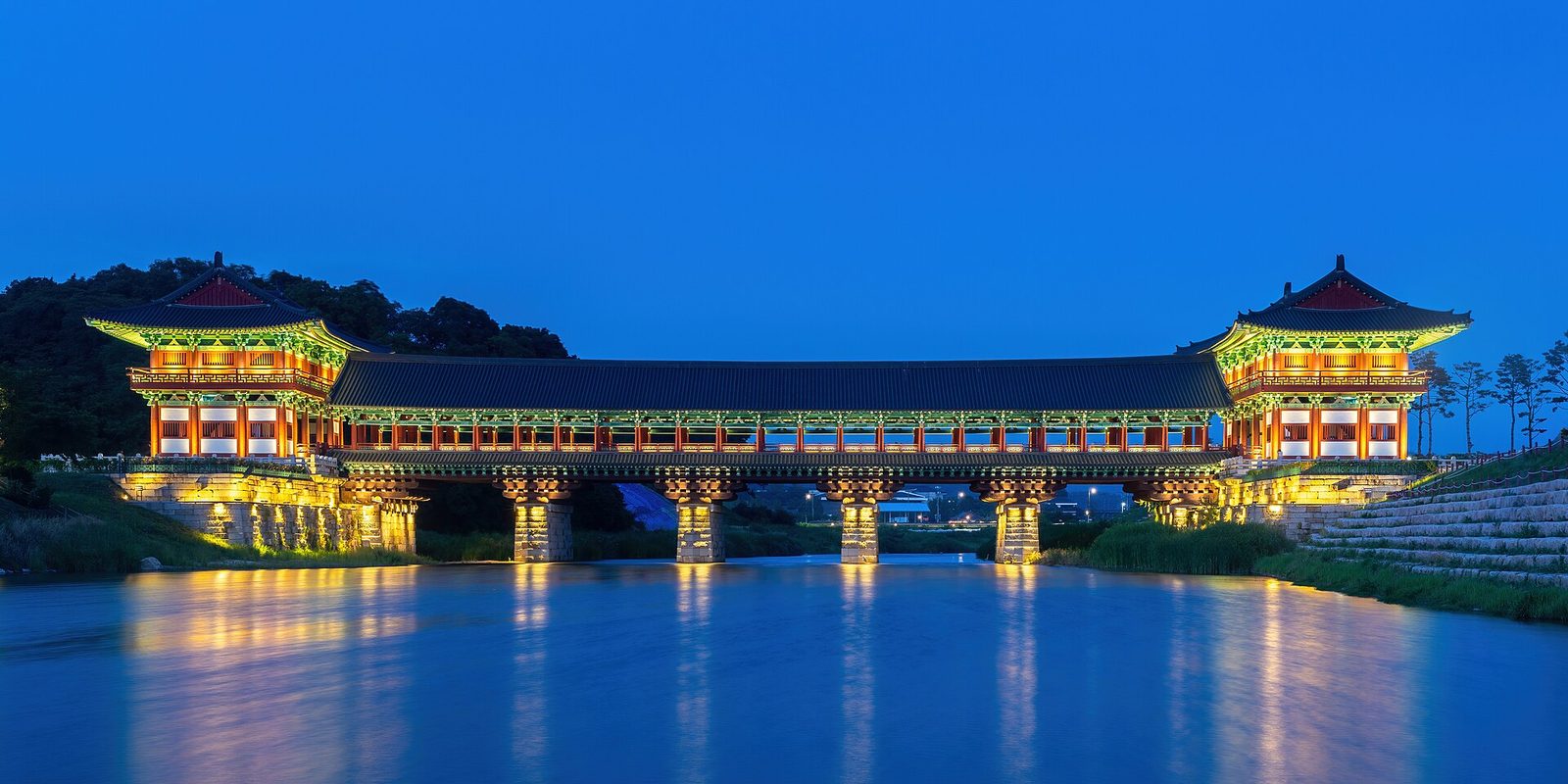
Gyochon is a quiet village of tiled-roof hanok houses built around Gyeongju's old Confucian school, a short walk south of Gyerim. At its southern edge, Woljeonggyo is a reconstructed Silla-era covered bridge with a gate tower at each end over the Namcheon stream (남천). It is impressive by day and even better lit at night.
Hours and admission: Gyochon is free with no set hours (address: 39-2 Gyochon-gil). Woljeonggyo is free and open 09:00–22:00; the exhibition in the gate tower opens at 10:00.
Hwangnidan-gil (황리단길)
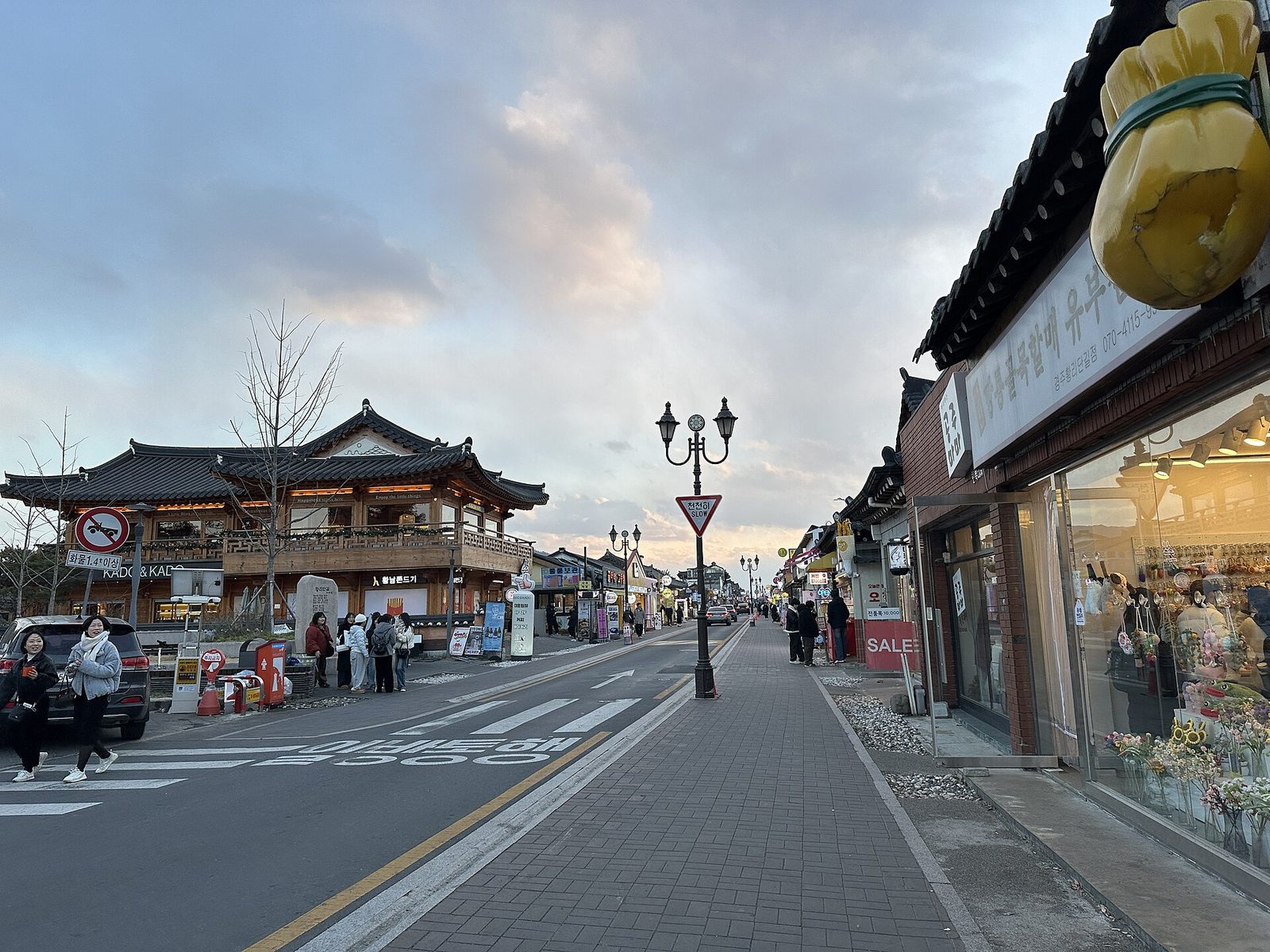
This street of small cafés, bakeries and shops in old hanok buildings runs along the west side of Daereungwon. It is the busiest part of town and a good place for a break between sights. The Hwangnam-ppang main store is a few minutes away (see Where to Eat).
Hours and admission: A public street, free to walk at any time.
Donggung Palace and Wolji Pond (동궁과 월지) at night
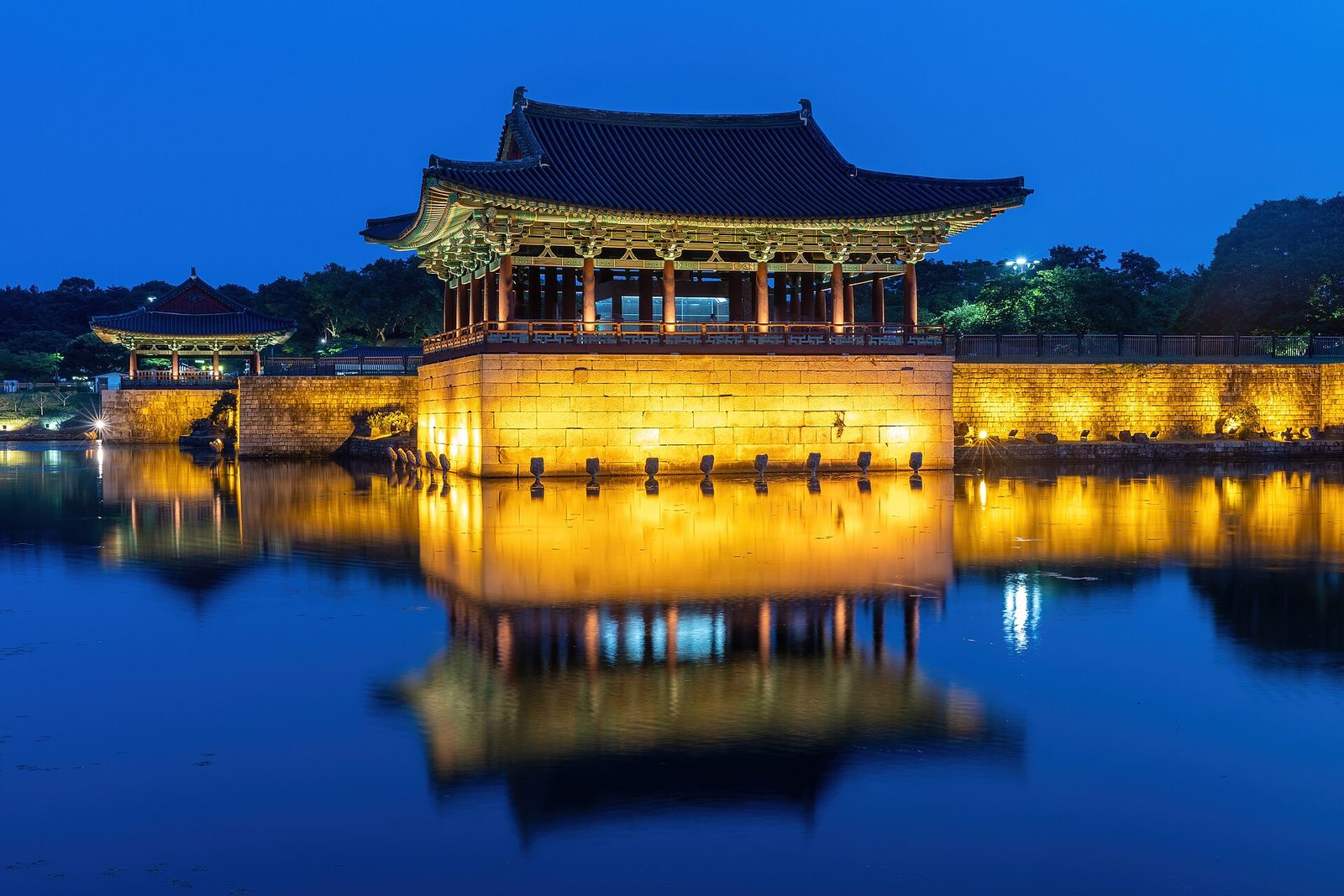
This was the crown prince's palace of Silla, built beside an artificial pond in the 7th century. A few pavilions have been rebuilt, and after sunset they are floodlit and reflected in the still water. It is the classic night view of Gyeongju. It is about 2 km east of Hwangnidan-gil, roughly a 25-minute walk or a short taxi ride.
Hours and admission: Open daily 09:00–22:00; ticket sales end at 21:30. Admission is ₩3,000 for adults, ₩2,000 for ages 13–18 and ₩1,000 for ages 7–12. The lights come on at sunset and stay on until 22:00.
Tip: Arrive about 30 minutes before sunset, which is a little after 17:00 in mid-November, then walk the path around the pond as the lights come on. On busy evenings, entry close to closing time can be refused, so don't leave it to the last half hour.
Day 2: Bulguksa and Seokguram
Bulguksa Temple (불국사)
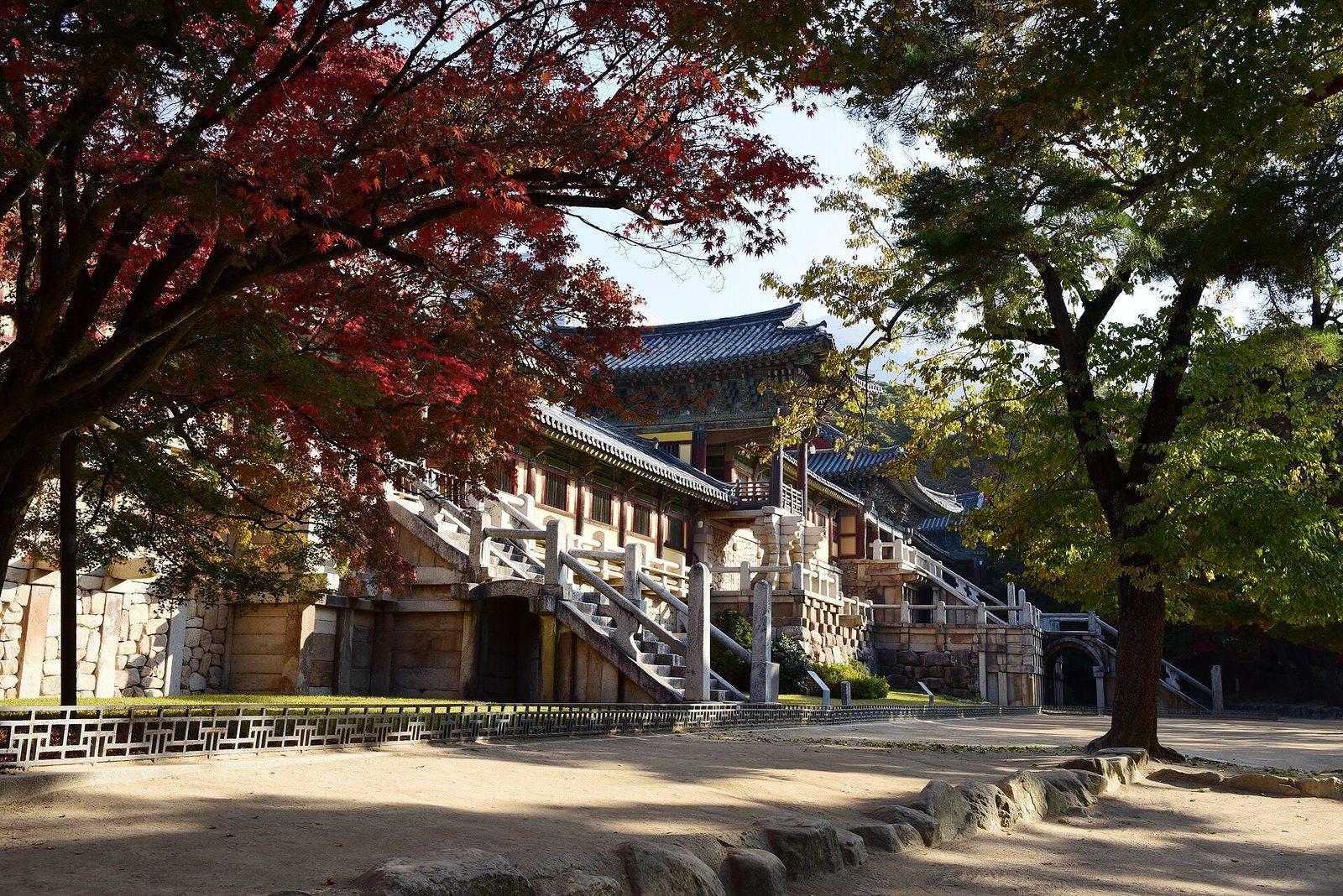
Bulguksa is a UNESCO World Heritage temple from the 8th century on the slopes of Tohamsan Mountain (토함산), famous for its stone bridges and stairways and two stone pagodas, Dabotap and Seokgatap. In autumn the maples around the entrance and the stone terraces make it the city's best-known foliage spot.
Hours and admission: Free. Open daily; from November to January, entry is from 09:00 until 17:00. Parking is ₩2,000. Address: 385 Bulguk-ro.
Tip: Take an early bus 10 or 11 and arrive close to opening time so you have the whole morning. The buses stop right below the temple, and Bulguksa is where they turn around.
Seokguram Grotto (석굴암)
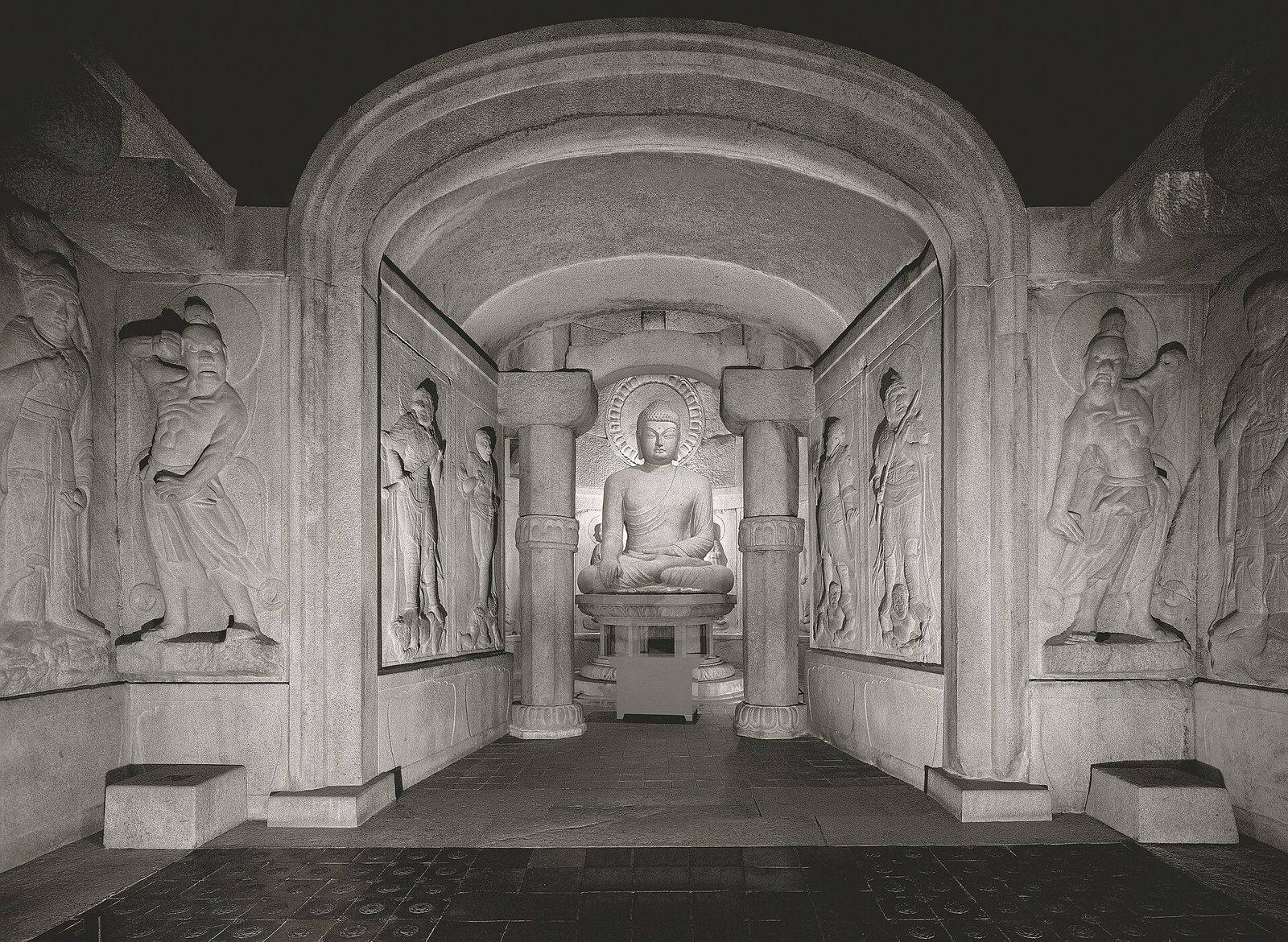
Higher up the same mountain, Seokguram is a small artificial stone grotto with a seated granite Buddha, one of the masterpieces of Silla art and part of the same World Heritage listing as Bulguksa. You see the Buddha through a glass screen. From the parking area it is a gentle walk along a forest path to the grotto.
Hours and admission: Free. From November to January it is open 09:00–17:00. Parking is ₩2,000.
Tip: Bus 12 runs from Bulguksa to the Seokguram parking area and back, from 08:40 to 16:40 from Bulguksa, with gaps of up to 80 minutes; a taxi takes about 15 minutes. The last bus up leaves Bulguksa at 16:40 and the grotto closes at 17:00, so go up by early afternoon.
Gyeongju National Museum (국립경주박물관) or Bomun Lake (보문호)
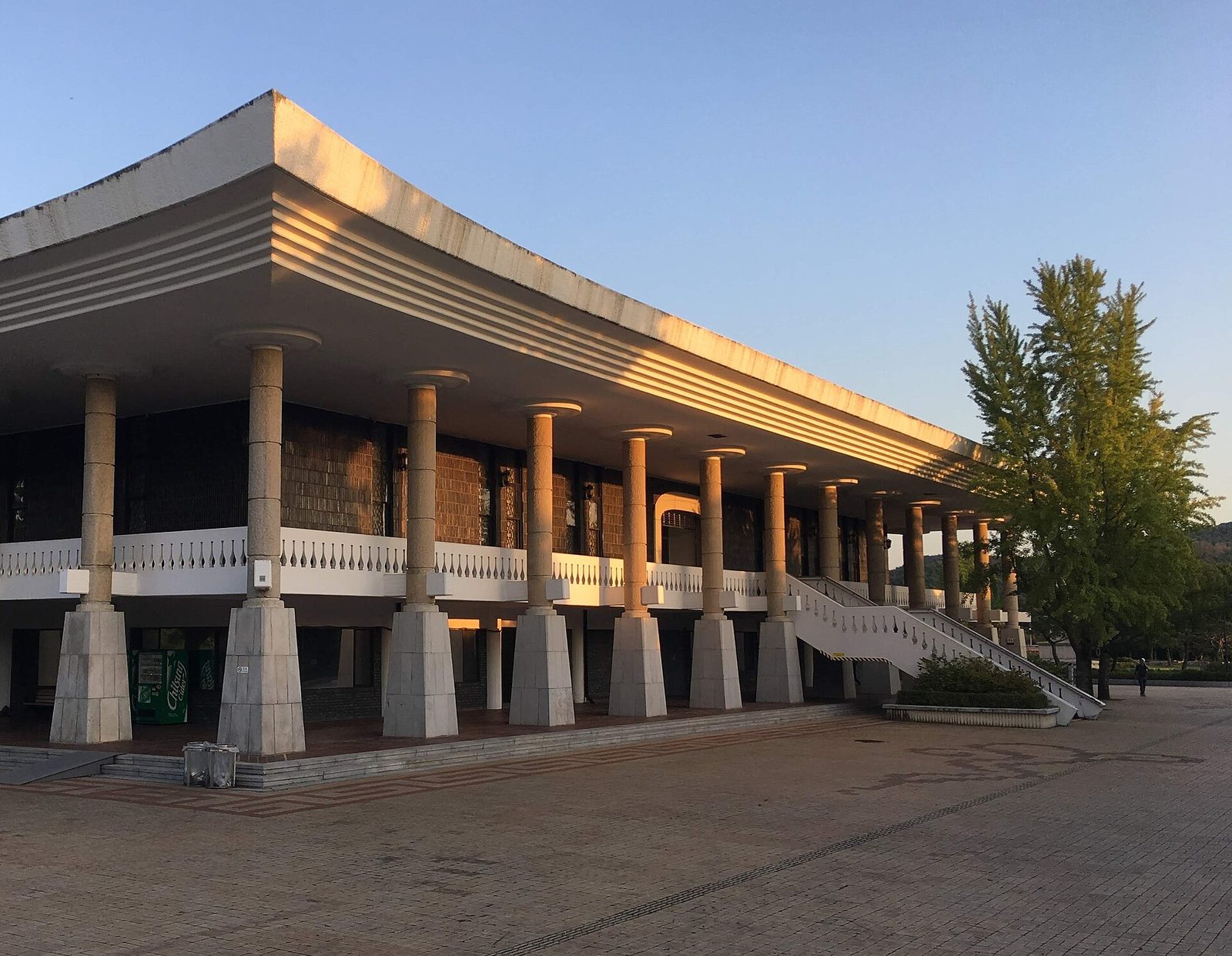
On the way back into town, bus 10 stops at the Gyeongju National Museum. It holds the gold crowns and other treasures found in the tombs you walked past on Day 1, and the huge Divine Bell of King Seongdeok stands outside. If you would rather be outdoors, take bus 11 from Bulguksa to Bomun Lake instead, a resort lake with a lakeside path of about 8 km (about 2 hours for the whole loop). Bikes and ATVs are not allowed on the path.
Hours and admission: The museum is free and open daily 10:00–18:00; entry closes 30 minutes before closing time. It is closed on January 1 and on the Seollal and Chuseok holidays. Address: 186 Iljeong-ro.
Tip: On the way between Bulguksa and the museum, buses 10 and 11 pass Tongiljeon (통일전), whose ginkgo-lined road turns bright yellow in November.
Where to Eat
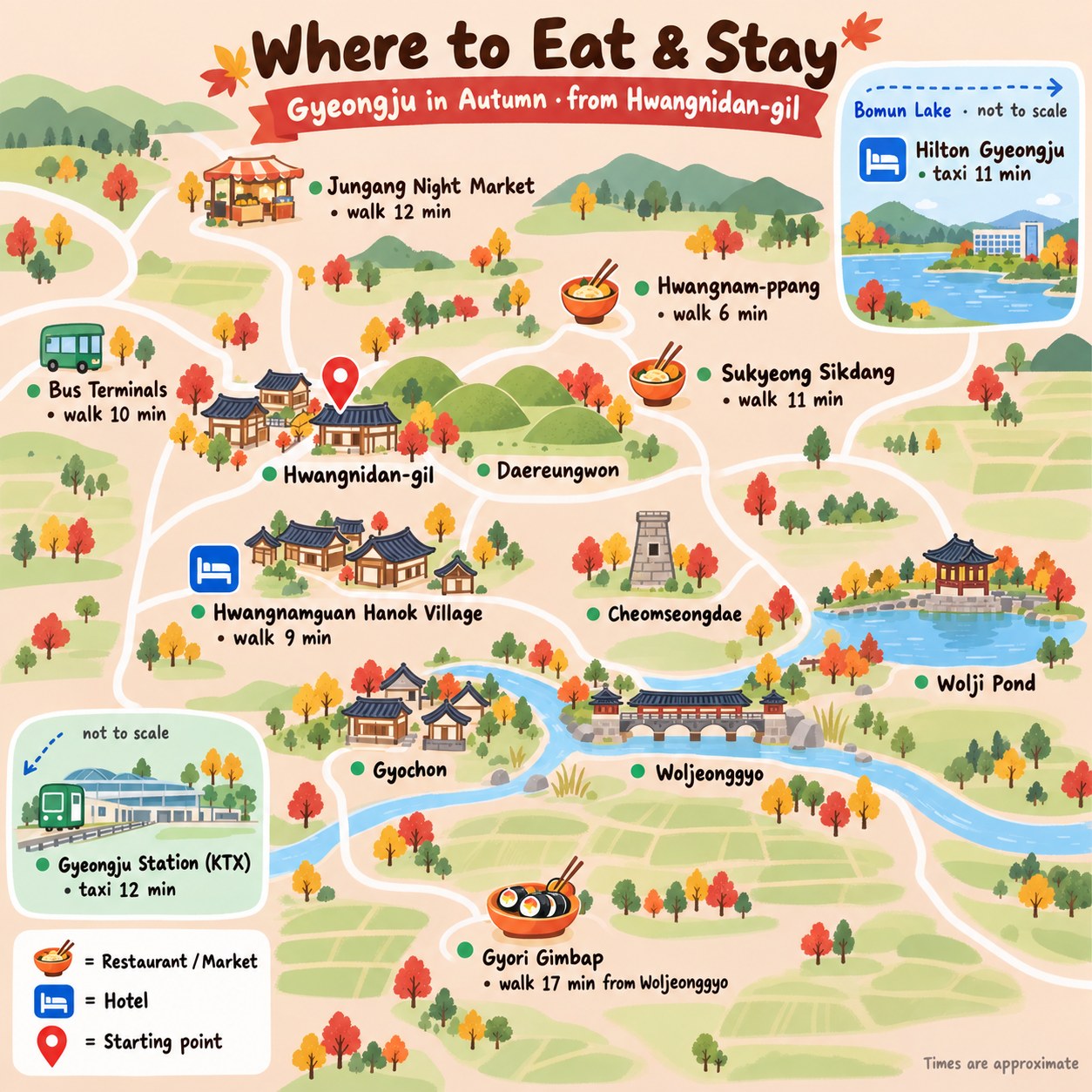
Times on the cards are approximate walking or taxi times from Hwangnidan-gil, next to Daereungwon, unless the card says otherwise.
Gyori Gimbap (교리김밥), main store
A famous gimbap shop whose rolls are packed with thin strips of egg omelette. It opens early, so it suits breakfast or an early lunch on Day 1 after Gyochon and Woljeonggyo.
Type: Korean, gimbap
Signature menu: Gyori gimbap (egg gimbap) and noodles
Hours: Monday, Tuesday, Thursday and Friday 08:30–17:30; weekends and public holidays 08:30–18:30; closed Wednesdays
Tip for foreign visitors: It opens at 08:30, so it works well for breakfast
Getting there: About 17 minutes' walk from Woljeonggyo
Address · phone: 2 Tapri 3-gil, Gyeongju (경주시 탑리3길 2) · 054-772-5130
Sukyeong Sikdang (숙영식당)
A Korean restaurant in an old house next to Daereungwon, open since 1979 and known for its barley-rice set: steamed barley rice with a spread of side dishes to mix in. Good for lunch on Day 1.
Type: Korean
Signature menu: Chalbori-bap set (찰보리밥 정식, barley rice set), pajeon (savoury pancake), dongdongju (rice wine)
Hours: 11:00–20:00 (last order 19:30), break 15:00–17:00; closed Tuesdays and public holidays
Tip for foreign visitors: The main barley-rice set is for two or more people; there is also a set for one
Getting there: Walk 11 min
Address · phone: 60 Gyerim-ro, Gyeongju (경주시 계림로 60) · 054-772-3369
Hwangnam-ppang (황남빵), main store
The original shop for Gyeongju's best-known snack, a small round pastry filled with sweet red-bean paste. Buy a few to eat warm, or a box to take home.
Type: Bakery, snacks
Signature menu: Hwangnam-ppang (red-bean pastry)
Hours: Daily 08:00–22:00
Tip for foreign visitors: Boxes travel well, so this is the easy souvenir to pick up on your way back to the station
Getting there: Walk 6 min
Address · phone: 783 Taejong-ro, Gyeongju (경주시 태종로 783) · 054-749-7000
Jungang Market night market (중앙시장 야시장)
In the evening, food stalls open in Gyeongju's central market. It is a casual, inexpensive dinner after the night lights at Wolji Pond.
Type: Night market, street food
Hours: 18:00–23:00; in the colder months it runs on Friday and Saturday nights only
Tip for foreign visitors: In the colder months it opens only on Friday and Saturday nights, so plan it for one of those evenings
Getting there: Walk 12 min
Address: 295 Geumseong-ro, Gyeongju (경주시 금성로 295)
Where to Stay
For a walking trip, stay in the centre near Hwangnidan-gil so Day 1 and the night at Wolji Pond are on your doorstep. If you prefer a large resort hotel, Bomun Lake is on the bus route to Bulguksa, which makes Day 2 easy.
Hwangnamguan Hanok Village (황남관 한옥호텔)
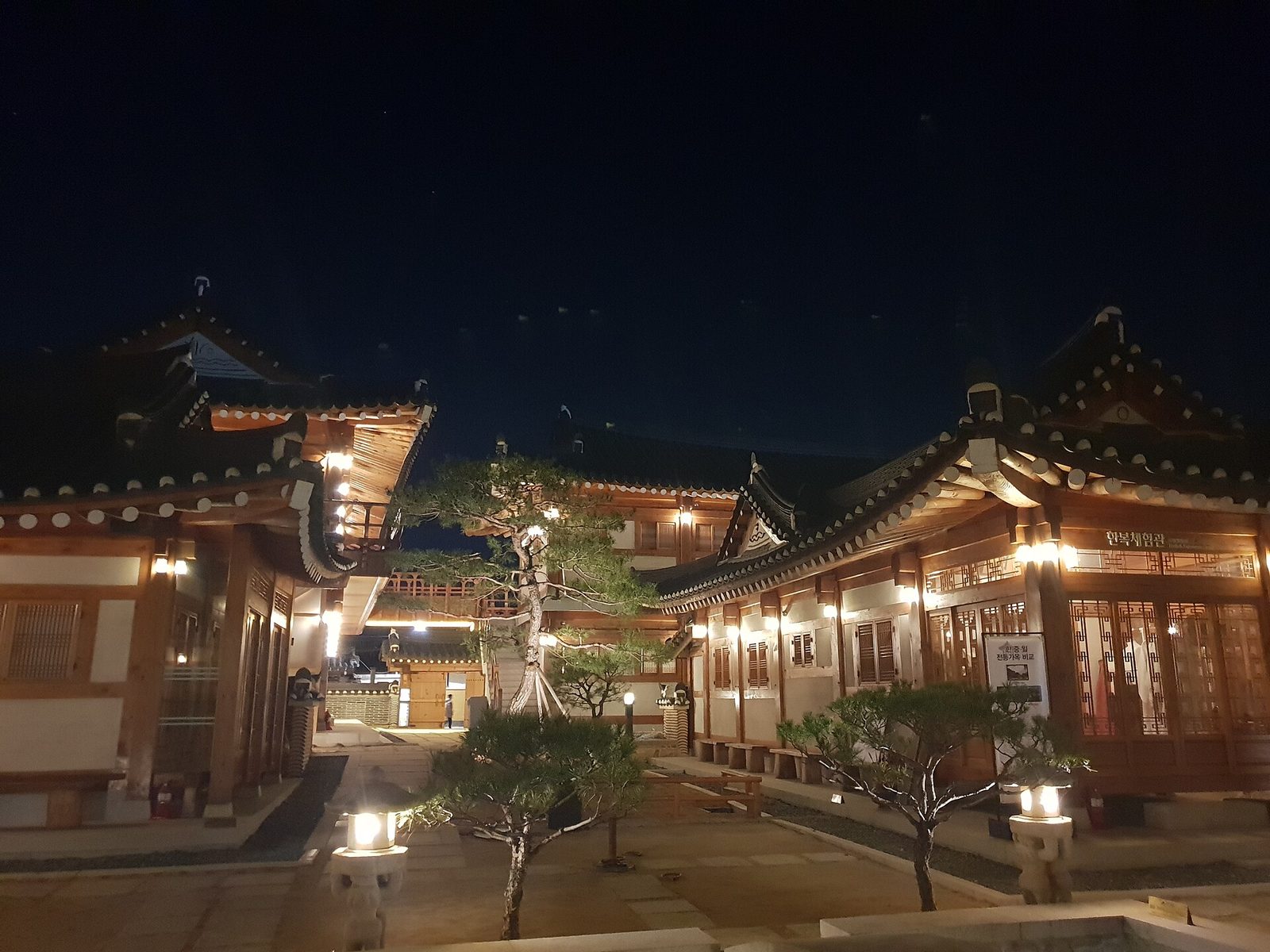

A hotel made up of traditional hanok buildings around courtyards, at the southern end of Hwangnidan-gil. You can walk to Daereungwon, Cheomseongdae and the cafés, and come back easily after the night lights.
Type: Hanok hotel
Check-in · check-out: 15:00 · 11:00
Price: In November, about ₩130,000 a night for a two-person ondol room (bedding on a heated floor) from Sunday to Thursday and ₩150,000 on Friday and Saturday; a suite with a bed is ₩180,000–200,000 (hotel booking page, checked 2026-10-20)
Tip for foreign visitors: Wolji Pond is about 25 minutes away on foot, so you can walk back after the night lights
Getting there: Walk 9 min from Hwangnidan-gil
Address · phone: 1038 Poseok-ro, Gyeongju (경주시 포석로 1038) · 054-620-5000
Hilton Gyeongju (힐튼 경주)
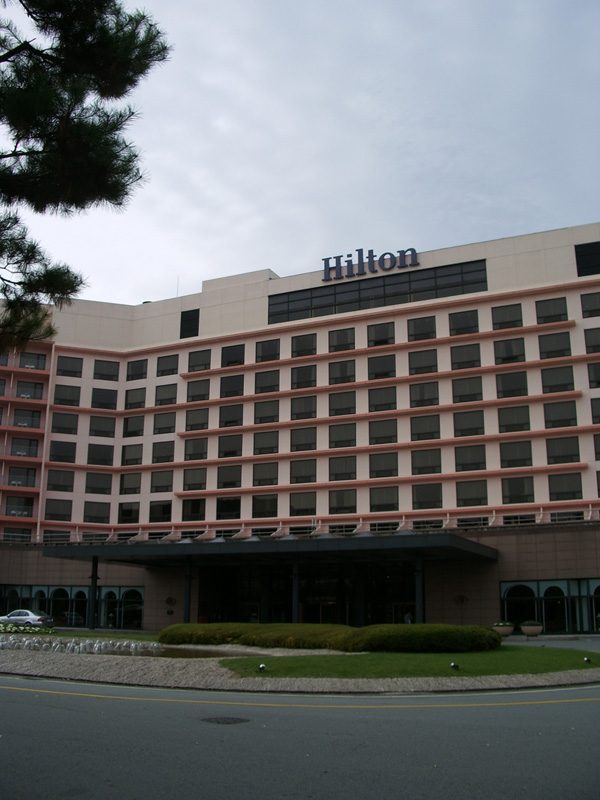

A large hotel on Bomun Lake with indoor and outdoor pools, about 10 km east of the centre by road. Buses 10 and 11 to Bulguksa stop nearby (Hilton Hotel stop).
Type: Resort hotel
Check-in · check-out: 15:00 · 11:00
Price: Lowest November rates on trivago are mostly about US$140–340 a night from Sunday to Thursday and US$250–510 on Friday and Saturday (checked 2026-10-20)
Tip for foreign visitors: Take the bus or a taxi into the centre for Day 1 and the night lights; the last buses 10 and 11 leave town between 21:40 and 22:00
Getting there: Taxi 11 min from Hwangnidan-gil
Address · phone: 484-7 Bomun-ro, Gyeongju (경주시 보문로 484-7) · 054-745-7788
Tips for Visitors
- Foliage timing. Gyeongju's maples and ginkgos are usually at their best from early to mid November.
- Start early on Day 2. Reaching Bulguksa near opening time leaves enough of the day for Seokguram before it closes.
- Plan around closing times. From November, the last entry to Bulguksa is at 17:00, Seokguram closes at 17:00, and the last bus 12 up to Seokguram leaves Bulguksa at 16:40.
- Use a transit card. Korean transit cards work on Gyeongju buses, are ₩50 cheaper than cash, and give you a free transfer within 30 minutes.
- Book the KTX ahead. Book your return when you book the outward trip, especially for a weekend.
- Dress for the evening. Wolji Pond is outdoors, so bring a warm layer for the night lights.
- Restaurants have closing days. Gyori Gimbap closes on Wednesdays and Sukyeong Sikdang on Tuesdays and public holidays, so swap them around on those days.
Good to know
Most of the sights in this guide are free: Daereungwon park, Cheomseongdae, Gyochon, Woljeonggyo, Bulguksa, Seokguram and the National Museum. Over two days, your main costs are the train, buses, Wolji Pond and Cheonmachong.
Sources
- Korail: KTX timetable (from November 1, 2026) and KTX fare table (from September 1, 2026)
- KOBUS: Seoul–Gyeongju express bus times and fares
- Gyeongju bus information: city bus fares, routes and times for buses 10, 11, 12, 50 and 70
- Gyeongju Culture & Tourism: city tour buses; luggage storage; admission fees; autumn spots
- Gyeongju Culture & Tourism place pages: Daereungwon, Cheomseongdae, Gyochon Village, Donggung and Wolji, Bomun Lake path
- Bulguksa and Seokguram: opening hours and admission
- Gyeongju National Museum: hours and admission
- Hwangnam-ppang: store hours; Naver and Korea Tourism Organization listings for the other restaurants, October 2026
- Hwangnamguan and Hilton Gyeongju: address and check-in times
- Walking and driving times: © OpenStreetMap contributors